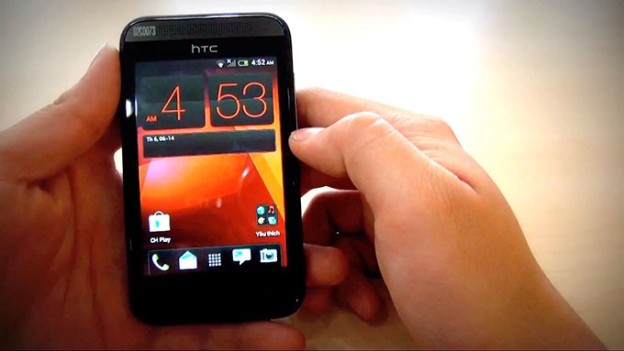
A new HTC Android smartphone, Desire 200 ,targeted at the budget segment, has made an online appearance in a video even before its launch.
The phone features a 3.5-inch LCD screen that has a resolution of 320×480 pixels. It’s powered by a 1GHz single-core processor and will have 512MB of RAM. It will come with 4GB internal storage expandable via microSD card and a 1400 mAh battery. The rear camera on the phone would have a 5-megapixel resolution and does not appear to come with a flash. The phone in the video runs Android 4.0 Ice Cream Sandwich but it’s expected that it would come with Android 4.1 (Jelly Bean) or later when it launches. It will feature HTC’s Sense UI layer on top.
The phone’s earpiece resembles the HTC One’s front speaker grills. It has three capacitive touch buttons below the screen like most recent HTC phones. The phone’s back looks similar to that of the HTC Desire C. It will also feature Beats Audio as apparent from the branding at the back.
Eight years, after the launch of the Xbox 360, Microsoft has launched its successor the Xbox One, which it claims is “the all-in-one entertainment console”. The company says that it will be available for sale by the end of this year but it has not yet revealed the price.Microsoft staked a claim to the Internet Age living room with an eagerly awaited Xbox One console touted as a home entertainment hub that goes far beyond games. “Today, we put you at the center of a new generation in the living room,” said Don Mattrick, head of Microsoft’s interactive entertainment business, unveiling the new version of the popular game console.
The Xbox One’s hardware specs:
While Microsoft said very little during the unveiling itself, the information we do have seems to confirm that the Xbox One is powered by an 8-core x86 AMD CPU, and a GPU that’s very similar to the Radeon 7790. There’s 8GB of DDR3 RAM (shared between the CPU and GPU), 32MB of very fast SRAM on the graphics die, and a total of 200GB of memory bandwidth (more on that later). There’s also some new silicon in Kinect 2.0, which will come with the Xbox One as standard. Rounding out the hardware, there’s a Blu-ray drive, 500GB hard drive, 802.11n WiFi (with WiFi Direct), HDMI in and out, Gigabit Ethernet (yay!), and USB 3.0. There’ll be three 802.11n radios, so that the console can connect to your gamepads (WiFi Direct), mobile devices, and home network without added latency.
Features:
Kinect: Kinect sensor has seen some serious upgrades in terms of the the camera and voice control, body movement detection etc and its bundled with the console now. The camera resolution is 1080p and is capable of capturing wide angles. It can also capture video at 60 frames per second. Oh, and the sensor can also read your heartbeat as you exercise, and tell whether you’re smiling or not.You can use the voice control on the Kinect to carry out tasks on the Xbox One such as setting up profiles and even turning the console on. You can also dictate activities to Xbox One. There’s also gesture recognition tech for controlling the system with your hands.
Snap Mode: This will let you run two activities simultaneously. Skype has also been introduced to Xbox universe and you can make Skype calls while running another activity on the Xbox. The Xbox One also has a distinct Windows 8 user interface, along with the Xbox OS and you can switch between the two.
New Xbox controller: Not much has changed as far as the controller is concerned, though unlike the Xbox 360 controller which used AA batteries, this will use integrated rechargeable batteries. According to ExpertReviews, the start and the select buttons are gone, replaced two new buttons with which look like they will trigger a menu and multi-tasking respectively.
Xbox Live: It comes with a TV guide which users can navigate by voice commands. The TV guide has a trending section that displays the most popular shows among your friends and the entire Xbox community. Instant Switch feature will you make the switch from gaming to Tv with just a voice command as well.
The console also has deeper Smartglass support, which will let you use your smartphone or tablet on the gaming console to perform secondary functions such as changing channels, etc. There’s also a dedicated game Digital Video recorder to capture and share your winning moments with friends during a game.
Asus announced the Fonepad on Monday at MWC along with its third generation Padfone, a 7in tablet that can make phone calls.
Following its announcement, all were confused, and questioned whether a 7in tablet should double up as a smartphone.
The first thing that struck us about the Fonepad was its design, in particular its similarities to the Nexus 7 tablet built by Asus. From the front, you’d be forgiven for confusing the Fonepad for Google’s tablet, since its glossy black bezel and dimensions are almost identical to those of the Nexus 7.
However, when you flip the device over the Asus Fonepad starts to show its uniqueness.
Unlike the plasticky Nexus 7, the Fonepad features a metallic back panel, which will be made available in both silver and gold hues. Although it’s not quite as easy to grip as the textured back panel of the Google Nexus 7, it certainly delivers a more high-end feel, despite the tablet’s budget price tag. Not to mention it looks great, especially the silvery hued model.
A 7in 1280×800 screen sits within this metallic casing, and for us this is one of the device’s highlights. The IPS screen technology that Asus has used means that the device offers excellent viewing angles, and text was legible even when we held the device under the bright MWC lights.
Not only that, the 7in multitouch display also delivers extremely vivid colours, and despite the similar screen specifications it easily outperforms the Nexus 7 display.
The Asus Fonepad is quite responsive too, thanks to the 1.2GHz Intel Atom processor under the bonnet. It”s not a fancy quad-core chip, but it certainly offers an all-around slick and fluid experience.
The latest version of Google’s mobile operating system, Android 4.2 Jelly Bean is onboard too, which Asus has supplemented with its own custom software shell. However, unlike the user interface that you’ll find on a Samsung or HTC device, Asus’ skin is very stripped back, a feature that should appeal to those who prefer a vanilla Android experience.
Of course, the most quirky feature Asus has added to the device is its ability to make calls. Much like the Samsung Galaxy Note 8.0, you can make calls straight from the device – a feature that will confuse some, including us. However, when we used the Fonepad’s dialpad we immediately recognised the the thought process behind it. Sure, we wouldn’t walk around London with a 7in tablet pressed against our face, but the device boasts a built-in speakerphone and can be used with headphones.
There’s also the ability to make video calls, thanks to the Fonepad’s front-facing camera. This has a 1.2MP sensor, and while it doesn’t produce high quality images, its good enough for video calling.
That’s not all the Asus Fonepad has to offer. It also comes with 16GB of internal storage expandable to 32GB via microSD, alongside a large 4,270mAh battery.
After weeks of teasing their MWC announcements, Asus has officially unveiled the PadFone Infinity. The new phone/tablet combo comes with improved internals to make for a package that competes directly with other 2013 flagships and brings the unique PadFone experience to a high-end smartphone.
The PadFone Infinity is two devices bundled into one. We will start with the good news. The Infinity ships with Android 4.2, so at least the software experience should be on par with the rest of flagships around. The display has grown from the 4.7-inch one in the PadFone 2 to a 5-inch Super IPS+ LCD, and the full HD tag means you get 441 pixels per inch. It matches the likes of the Xperia Z and HTC Butterfly and brings a 1080p resolution to the table.
The Asus PadFone brings two full HD displays in one retail package
The PadFone Infinity’s tablet component, or what Asus calls the Infinity Station, retains the 10.1-inch screen, but there’s full HD resolution here too: it now has a resolution of 1920 x 1200 pixels, up from 1280 x 800 pixels in the last model. The Infinity’s insides have been upgraded too. It packs a quad-core Snapdragon 600 chip clocked at 1.7GHz and an Adreno 320 GPU, a combination that is gracing more and more flagships. The RAM has also been increased from 1GB to 2GB. Buyers can choose to get the 32GB or the 64GB version of the PadFone Infinity. However, there is no microSD card slot, which is an odd decision considering one could have been fitted into the PadFone’s tablet component without much issue. You get the usual connectivity options such as WiFi, Bluetooth 4.0, NFC, A-GPS and even GLONASS. The device uses a nano-SIM rather than micro-SIM. On the back, Asus has added a 13 megapixel auto-focus camera, an LED flash, a five-element f/2.0 lens and burst shooting at 8fps. The front-facing camera on both the tablet component and the phone is a 2 megapixel one. When docked, the PadFone uses the phone’s primary camera to take rear shots. Besides running Android 4.2 Jelly Bean, the PadFone Infinity comes with come Asus-exclusive apps. These include SuperNote for note taking, Story for creating a more immersive photo album and ASUS Echo for voice control. Battery life on the PadFone Infinity sounds promising. The 2,400mAh battery within the phone is good enough for about 10 hours of real-world use. The company claims the device can give you up to 19 hours of 3G talk time and 40 hours when docked into Infinity Station. The dock also has enough juice (5000 mAh) to fully recharge the docked PadFone Infinity up to three times, according to the company. Here are the key specifications of the PadFone Infinity:
5-inch Super IPS+ full HD display (phone) and 10.1-inch display with 1920 x 1200 resolution (tablet)
4G, LTE Cat3 up to 100Mbps DL, 3G, DC-HSPA+ up to 42Mbps, GSM, EDGE
13 megapixel primary camera with LED flash and 2 megapixel front camera
32 or 64GB internal storage
MicroUSB 2.0 with MHL link and USB Host support
And now for the bad news: the combined price of the Asus PadFone Infinity and the Infinity Station will be around £800 (approx Rs 65,000). The PadFone will arrive in Europe first, followed by Asia. Those looking to buy will have grey, gold and pink colour options to choose from.
Samsung has shown off a Tizen reference device at MWC 2013. The first devices running Tizen are expected to hit store shelves as early as June this year.
We’ve known since last year’s rumours, that Samsung will be shutting down development of the bada OS, and instead focus on its open-source Linux-based OS Tizen which it is building in collaboration with Intel. That announcement is now official, and the Korean giant aims to allocate resources from bada to Tizen, whilst helping developers with the transition. The bada OS was Samsung’s self-developed smartphone OS that initially gained traction, but ultimately failed to grab a market share when compared to Android-powered devices in the same price range.
The first devices running the Tizen OS are expected to hit store shelves as early as July 2013. Apart from Samsung and Intel, who are at the forefront of the development of the OS, NTT Docomo has committed itself as a carrier for the device in Japan.
After getting a look at Tizen 2.0 in action on this developer device, it definitely looks like the OS is coming along nicely. It seems to have most of the trappings of a modern OS, like a slide-to-unlock lock scree, multitasking menu and notification shade, but there are some small parts of those features that are a bit different than what we’re used to seeing. For example, the green battery indicator below the time at the top of the screen and the fact that the action of swiping down to access the notification area actually pulls the home screen down to the bottom of the display rather than pulling the notification shade down over the top of the home screen.
The Tizen Association has been working for a year and a half on the application ecosystem, and there are thousands of apps already ready to support the platform. But the group declined to provide an exact number, and only said that there would be a robust number of apps by the launch.
The show has also been the place for upstart operating systems. Mozilla unveiled its Firefox OS earlier in the show, complete with a large group of partners backing the initiative. Phones running on the Ubuntu mobile OS have been floating around the show as well.
The mobile industry is definitely becoming a bit more crowded as of late with all of the new OSes that are coming soon, including Tizen, Sailfish OS, Ubuntu and Firefox OS. It’s not known which of those platforms will take off and which will fizzle out, but with heavy backing from Intel and Samsung as well as support from several other companies, Tizen’s certainly got a shot at gaining some traction. After watching Tizen 2.0 in action on Samsung’s reference hardware, what are your thoughts on the OS?
Nvidia might make your next smartphone. The Nvidia Phoenix – pictured here – is a reference phone for the time being, but the company has already shown it’s not afraid to make its own kit with Project Shield and now it could be setting its sights on the smartphone and tablet market.
Nvidia is keeping schtum about the particulars, but reckons that with its components facing tougher market conditions (the unlikely phrases ‘increasingly vertical’ and ‘commoditisation’ were used) a move to make its own smartphones and tablets will pay off in the long run.
While won’t be able to grab of these devices, be sure you you take a good look at the Phoenix, as it’s going to be a while before we see anything else like it. Nonetheless, this reference design rocks the NVIDIA Tegra 4i, which we’ve most recently seen it tearing the competition to pieces in some recently released benchmarks.
While the Phoenix itself isn’t for the end consumer, it certainly doesn’t mean that we don’t want one. The device shows off just what the NVIDIA Tegra 4 can do, and that’s good enough for us. The reference design ships with a 5 inch 1080p HD display, 13 megapixel camera, and more.
The Tegra 4 family is leaps and bounds more powerful than the NVIDIA Tegra 3, and will offer up some great native features, like always-on HDR.
LG showcased its much hyped Optimus series devices, that we’ve known about for quite sometime now, at the Mobile World Congress. It reiterated the presence of the Optimus G and Vu series and officially debuted the F and LII series of smartphones that have been seen in the previous weeks gaining momentum to the MWC.
LG Optimus G series
The company announced its latest flagship, the Optimus G Pro, which was recently launched in Japan and Korea both countries receiving different variants of the device. As expected both devices were spotted on the MWC floor.
To recap, the Korean version of the Optimus G Pro comes with a 5.5-inch 1080p full HD IPS display, a powerful 1.7GHz quad-core Qualcomm Snapdragon S4 Pro processor with 2GB RAM, Android 4.1.2 Jelly Bean, 3,140mAh battery, 13-megapixel rear shooter and a 2.1-megapixel front camera. The device features advanced UX features like dual-recording allowing users to shoot video from both the cameras simultaneously and Virtual Reality Panorama to capture panorama shots at 360 degree, QSlide, Live Zooming and QuickMemo.
The device features the typical LG glitter pattern on the back panel offering a "Digital Cube" effect, which is quite reminiscent of the Nexus 4. It sports a curved glass display that the company claims to give it a "2.5D" effect. The handset will be available in black and white colours and will pack a rather slim bezel.
This joins the company’s Optimus G that was originally launched in September last year. It is powered by 1.5GHz quad-core Snapdragon S4 Pro processor alongside 2GB of RAM. It includes a 4.7-inch 1280×768 (320ppi) display and sports a 13-megapixel rear camera and a 1.3-megapixel front shooter.
It comes with 32GB of built-in flash storage, but no microSD card slot or expandable storage of any kind. Connectivity options include Wi-Fi, Bluetooth, Micro-USB and NFC. The phone originally shipped with Android 4.0 Ice Cream Sandwich, but as per the listing on Saholic, in India, the phone will come with Android 4.1 Jelly Bean preloaded. The device is now available online in the country for Rs. 30, 990.
LG Optimus Vu Series
The LG Optimus Vu was launched in Korea and Japan in August last year and reached India two months later priced at Rs. 34,500. The 5-inch device simply made an appearance at MWC. It features TRUE-XGA IPS Display with a 1024×768 pixel revolution and a 4:3 aspect ratio.
Other specs include a 1.5GHz quad-core processor with 1GB RAM, Android 4.0.4, 32GB of internal storage and a 2,080mAh battery. The device also boasts a variety of connectivity options like Wi-Fi, 3G (HSPA+21 Mbps), Bluetooth 4.0, HDMI, DLNA, NFC, LTE and A-GPS. LG is also offering an NFC Tag(3) and a Rubbebdium Pen with the Optimus Vu.
The successor to this device came in the form of the Vu II, with a Qualcomm 1.5Ghz dual-core processor on board with 2GB RAM, 3 GB of internal storage, an 8-megapixel autofocus rear shooter and a 1.3 megapixel front camera and a 2150mAh battery. It is available in three colour options – white, black and pink. The Pen of the Optimus Vu II has a slimmer nib, which LG feels will facilitate more accurate handwriting. Other features include Vu Talk and QRemote.
LG Optimus LII Series
LG unveiled the next generation L Series II smartphones – the Optimus L3 II, Optimus L5 II and Optimus L7 II ahead of their official debut at MWC. The Korean manufacturer claims that it has built upon the widely successful L Series smartphones that sold more than 10 million units in the first 10 months, to include "contemporary design aesthetics and innovations that improve on the original".
In that regard, LG says it has introduced four new design elements incorporating a Seamless Layout, Laser Cut Contour, Radiant Rear Design and Smart LED Lighting on the home button.
The Optimus L7 II features a 4.3-inch IPS WVGA display, Android 4.1 Jelly Bean, 8-megapixel rear camera with LED flash, VGA front-facing camera, 1GHz dual-core Qualcomm MSM8225 processor with 768MB RAM, 4GB of internal storage and microSD card support. The handset measures 121.5 x 66.6 x 9.7 mm, and comes with a 2,460 mAh battery.
The Optimus L3 II with 3.2-inch QVGA IPS display and 1,540mAh battery Optimus L5 II has a larger 4-inch WVGA display and 1,700mAh battery.
The LII Series devices are said to be equipped with various proprietary features like QuickMemo, Quick Button and Safety Care.
QuickMemo allows users to capture and share handwritten ideas with a single tap, while Quick Button enables customers to personalize a hotkey to launch any app such as the camera, browser, music player or even QuickMemo. Safety Care offers three options – Emergency Call Forwarding, Phone Non-Usage Notice’ and My Location Notice – which can be programmed for emergency contacts.
LG Optimus F series
Earleir teased on LG’s Facebook page, the new F Series device feature the 4G LTE capable Optimus F5 and F7 smartphones. The device images were posted by notorious Twitter user @evleaks a week before the Barcelona event.
The Optimus F7 is said to feature a 4.7-inch True HD IPS (312ppi) display, a 1.5GHz dual-core processor, 2GB RAM, 8GB internal storage with a microSD slot for up to 32GB expansion, an 8-megapixel rear camera, 1.3-megapixel front camera and a 2,540mAH battery.
The Optimus F5 will sport a 4.3-inch IPS (256ppi) display, a 1.2GHz dual-core processor with 1GB RAM, 5-megapixel rear camera, 1.3-megapixel front camera, 8GB internal storage expandable upto 32GB via microSD and a 2,150mAH battery. Both the phones will feature Android 4.1.2 Jelly Bean and will have latest LG features like QSlide, QuickMemo, Live Zooming, QTranslator and Video Wiz amongst many others.
The company claims the handset’s LTE Category 4 modem offers download speeds of up to 150Mbps.
Networking and telecommunications equipment specialist Huawei Technologies introduced the Ascend P2, which the company claims is the world’s fastest smartphone with a 1.5GHz quad-core processor and Long Term Evolution (LTE) Category 4 technology, which provides download speeds of up to 150M bps.
The handset sports an infinity edge 4.7-inch high-definition in-cell touch display with second-generation Corning Gorilla Glass and will be available in black and white. The Ascend P2 will be on sale in France through network operator Orange in June 2013 and will also be available globally in the second quarter of 2013, the company said.
"We’re pleased to be working with Huawei again to enable our customers to have easier and faster access to all their favorite content," Yves Maitre, senior vice president of mobile multimedia and devices at Orange, said in a statement. "We are impressed by the design and look forward to putting the Ascend P2 into the hands of consumers as soon as possible."
The Emotion UI is also preinstalled with a smartphone housekeeper function to support real-time data-traffic tracking, automatic blacklisting and blocking, periodical system cleaning, and spontaneous exiting of idle programs and cache cleanup. The device also features antivirus, energy saving, privacy protection, software management and other functions.
The company claimed its proprietary swift sharing technology supports uploads and downloads two to three times faster than other smartphones in a WiFi environment, while its near-field communication (NFC) module enables e-payments and can act as an electronic ticket. In addition, Huawei’s Quick Power Control (QPC) and Automated Discontinuous Reception (ADRX) power-saving technologies reduce power consumption and charging time.
Other features include a 13-megapixel rear-facing camera with high dynamic range (HDR), and a 1.3MP front-facing camera for self-portrait and video shooting. A dedicated camera key on the side of the phone also allows instant access to picture taking, with one click for the camera to be activated and another time to take the shot. With Huawei’s camera algorithm, high-definition images can be captured even in backlit conditions, and the camera also features auto-adjustment modes.
The touch-screen, just 8.4mm slim, offers a "magic touch" feature that provides enhanced screen responsiveness, even when the user is wearing gloves.
Additionally, instant keyword translation and Wikipedia searches can now be done on a single window with the company’s "smart reading" technology. The screen also calibrates its brightness automatically under a variety of light conditions.
Following in the wake of Samsung’s and HP’s announcements yesterday, Lenovo has unveiled three new tablets to join the Android fray. These include a pair of 7-inch models, the A1000 and A3000, and a 10-inch slate, the S6000.
Lenovo’s two 7-inch tablets and 10.1-inch tablet all run Google’s Android operating system and feature enhanced audio and dual-core or quad-core processors.
The company is positioning the A1000 as “ideal for first-time tablet buyers,” which suggests a budget price point as does the dual-core processor. Lenovo says it has up to 16GB of internal capacity, which may mean there will be 8GB and 16GB versions, though the A1000 will come with a microSD card slot for additional storage. One premium feature is the inclusion of Dolby Digital Plus technology for improved audio performance.
In comparison, the A3000 gets a quad-core MediaTek processor and a vague promise of ” extensive memory, ” though the IPS display only has a resolution of 1,024×600. You do get the option of 3G connectivity if you need to get online while away from a Wi-Fi connection.
While the S6000 doesn’t have all of the top-end features of Google’s Nexus 10, it may turn out to be a lower-cost competitor. It will also make use of a quad-core MediaTek processor (the MTK 8389/8125), and the company promises a “substantial battery” in a 20-ounce package. Again, resolution on this IPS screen is not ultra-high res — 1,280×800 — but presumably the price tag is not ultra-high, either.
“Lenovo’s latest Android tablet family is designed to meet the demands of a wide range of customers, particularly young, active users who are always on the go, and have adopted the 7-inch form factor as their own. With these latest additions to our tablet portfolio, we’ve created devices that address these customers’ needs, as well as devices for more demanding gamers and multimedia users,” Chen Wenhui, vice president and general manager of Lenovo’s mobile business unit, said in a statement. “We believe that our Android family of tablets will appeal to customers across the world as we’ve built our products to be highly accessible and flexible to serve multiple needs and budgets.”
Unfortunately, Lenovo hasn’t disclosed the pricing on any of the three new tablets, though it says they will be released sometime in the second quarter of this year.
Samsung has surprised everyone at MWC in Barcelona by unveiling an eight-inch version of its stylus-equipped Galaxy Note tablet.
The new tablet is more than a smaller version of the Samsung Galaxy Note 10.1; there’s an uprated specification, and Samsung has also improved how the Note’s built-in stylus works. In Europe the Note 8 will have built-in 3G.
The Note 8 has a 1.6GHz quad-core processor, up from the 1.4GHz model in the Galaxy Note 10.1. As you’d expect, it’s significantly lighter, at 335g compared to 597g, so won’t be as much of a strain to carry around.
As with the Note 10.1, the Note 8’s S-Pen stylus is more than just a dumb pointing device. There are several stylus-specific functions built into the tablet’s Android 4.1 OS, such as pressure-sensitivity and windows that pop up over whatever app you’re currently using to help you take a quick note. Unlike on the Note 10.1, you can now use the S-Pen to tap the back and menu buttons under the Note 8’s screen.
The Note 8 also improved on the Note 10.1’s Multiscreen support, where two apps sit side-by-side, so you can watch a YouTube video while taking notes, for example. While the larger tablet only supported Multiscreen in six apps, there are now 20 apps that can sit side by side. It’s a big step towards making a tablet as useful as a laptop for certain tasks.
There are no great surprises behind the Note 8’s display. It’s a 1,280×800-pixel model, which gives it a pixel density of 189ppi. This is nothing spectacular, but is slightly more than the iPad Mini’s 163ppi.
The built-in 3G is a bonus for European users, especially for city dwellers with easy access to fast HSDPA networks. It also means it’s possible to use the Note 8 as a phone, but we’d recommend using a headset of some description rather than holding it to your head.
We liked the Galaxy Note 10.1’s stylus, but thought the tablet was overpriced compared to the competition. The Galaxy Note 8 is a useful smaller version, but, with no pricing information yet available, it remains to be seen whether Samsung will charge a large premium over the benchmark for tablets at this size: Google’s £159 Nexus 7.

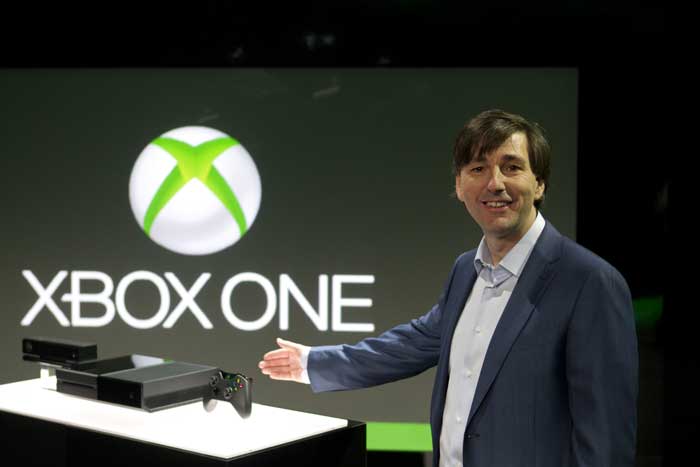
 Eight years, after the launch of the Xbox 360, Microsoft has launched its successor the Xbox One, which it claims is “the all-in-one entertainment console”. The company says that it will be available for sale by the end of this year but it has not yet revealed the price.Microsoft staked a claim to the Internet Age living room with an eagerly awaited Xbox One console touted as a home entertainment hub that goes far beyond games.


