Tag: Asus

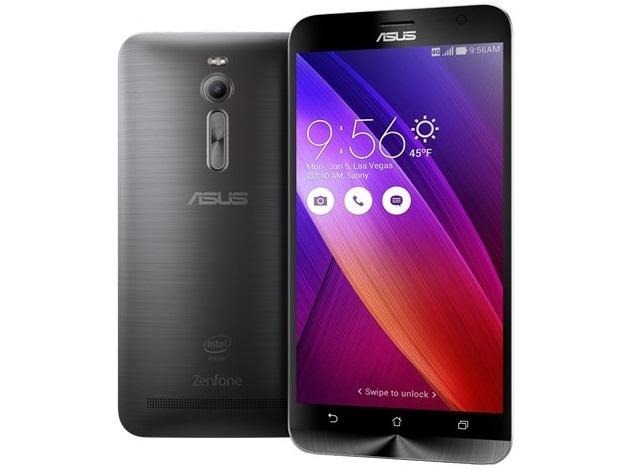
  • Asus Zenfone 2: Redefining your smartphone experience

    Asus Zenfone 2: Redefining your smartphone experience

    162015110827AM_635_asus_zenfone_2.jpeg


    Recently, ASUS pulled the wraps off its latest Android powered smartphone, the Zenfone 2. The first Zenfone devices were launched around a year ago and they performed well in the market. The new Zenfone 2 will redefine your smartphone experience completely.

    First Smartphone with 4 GB Ram

    Asus Zenfone 2 is the world’s first smartphone with a huge amount of RAM of 4 GBs. This makes the UI very smooth and responsive. It also gives you the feel of using a high end smartphone. It handles the games fluently. Multitasking is very nice due to this high RAM capacity.

    5.5 Inch Full HD Display

    If you are a fan of big screens then it features a large 5.5-inch IPS LCD display with a Full HD 1080p resolution, with a pixel density of 403 ppi. The display experience is great. The screen is sharp and bright enough to easily visible in daylight. It also provides great viewing angles. You’ll have a great time watching videos or playing games on this big 5.5 inch display.

    A very nice camera

    The Asus Zenfone 2 comes with a 13 MP rear camera, with a dual tone LED flash, and a aperture of f/2.0. Similar to previous Zenfone series devices, this also features ASUS’ Pixelmaster technology that is supposed to help assistance in taking photos especially on low light conditions.

    The cool Zen UI

    The Asus Zenfone 2 comes with Lollipop loaded. Alongwith the awesome and good looking Asus Zen UI. It features some elements of material design from lollipop. There are a lot of preinstalled applications, for example, Easy Mode helps in creating a simplified interface, and a one-handed mode, which makes the UI comfortable for one-handed use, and can be triggered by a double tap of the home button.

    The awesome design

    Although Zenfone 2 is a mid range device but the design and build of the device will make you feel good. The device comes with rounded corners, and the back has a nice curve to it which helps in very comfortable feel in the hand. The plastic back features a metallic coating, which makes the device good looking and also gives you a good grip and prevents the back from getting fingerprints.

    The Specifications at a glance

    5.5-inch IPS display with 1080p (Full HD) resolution with Corning Gorilla Glass 3.

    64-bit Quad-Core Intel Atom Z3560/Z3580 processor (1.8/2.3GHz).

    PowerVR G6430 from Imagination

    2GB/4GB.

    16GB/32GB/64GB, microSD card slot, up to 64GB.

    Camera
    Rear: 13MP, f/2.0-aperture, auto-focus with dual-color Real Tone flash, 1080p@30fps video recording
    Front: 5MP, f/2.0-aperture, wide-angle 85-degree lens with Selfie Panorama

    3000mAh lithium-polymer battery with fast-charge technology.

    Connectivity – 802.11ac, Wi-Fi Direct, Bluetooth 4.0, NFC, GPS

    Networks- GSM, 3G, 4G LTE

    Android Lollipop

    Weight – 170g

  • The 4.5-inch Asus ZenFone 4 available for Rs.6,999

    The 4.5-inch Asus ZenFone 4 available for Rs.6,999

    2503812_Asus_ZenFone_4_2014-2

    Competing with Motorola and Xiaomi, Asus has taken the Indian smartphone market by storm by adding a new phone to its ZenPhone series. The 4.5-inch Asus ZenFone 4 will be available for pre-order on Flipkart for Rs.6,999 starting midnight of Sunday, August 24th.

    The phone is equipped 1.2GHz dual-core Intel Atom processor alongwith 1GB RAM and 8GB of internal memory. You can also use a microSD card up to 64 GB.

    The design and build remains the same as other phones in the Zenfone series. Another visible difference is the addition of LED Flash. The rear camera now incorporates an 8 MP camera which brings noticeable improvement in photography. Battery capacity has been bumped up to 1750 mAh as compared to Zenfone 4. We don’t have stats for how long this will last but you can expect it to last one day with moderate usage.

    The company had already announced both the 4-inch and 4.5-inch models of the Zenfone 4, but the laterA450CG variant wasn’t available for purchase till now. The Zenfone 4 A450CG will be taking on the hugely popular Moto E and Redmi 1S, with similar prices.

    Asus Zenfone 4 A450CG(ZenFone 4.5) Specs

    • Display Size: 4.5 Inch LCD, 854 x 480 resolution, 217 PPI, Corning Gorilla Glass 3 protection
    • Processor: 1.2  GHz dual Core Intel Atom Z2520 processor with PowerVRSGX 544 GPU clocked at 300 MHz
    • RAM: 1 GB
    • Software Version: Android 4.4.2 KitKat (customized)
    • Camera: 8 MP
    • Secondary Camera: VGA
    • Internal Storage:  8 GB
    • External Storage: MicroSD support up to 64 GB
    • Battery: 1750 mAh, Non Removable
    • Dual SIM (Both MicroSIM)
  • CES 2014: Asus Transformer Book Duet laptop runs Windows 8.1 and Android

    CES 2014: Asus Transformer Book Duet laptop runs Windows 8.1 and Android

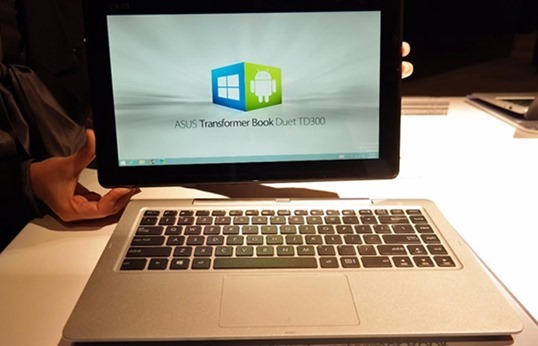
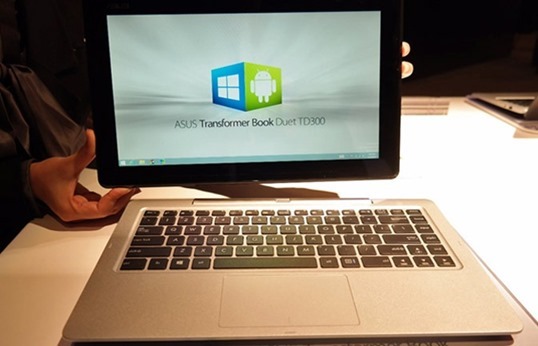
    asus_transformer_ss_2The ASUS Transformer Book Duet TD300 unites Windows 8.1 and Android. Thanks to BlueStacks’ virtualization software, this 13-inch combo tablet-laptop can switch between Microsoft’s and Google operating systems at the press of a button. That gives users access to Word Excel or documents spreadsheets in Windows, and lets them swing a quick game of “Angry Birds: Star Wars” over in Android. With a detachable keyboard dock, the Duet hits high notes on specs: there’s up to a 1TB storage drive, USB 3.0, HDMI and a 1080p display upgrade.

    The Transformer Book Duet also features a microSD card expansion slot, a front-facing camera, and audio enhancing SonicMaster technology to complement the tablet’s dual speakers.

    Though the dual-OS packing convertible tablet is an impressive release, the tablet has a few downsides. It runs an older version of Android (4.1) and, with the dock, it’s a thick and hefty package.As for the hardware, well, this feels like a $599 machine, and that’s actually us being generous. Granted, the build quality is solid, but the textured plastic back has a cheap, hollow feel to it. Also, at 1.9kg (4.2 pounds), it’s rather heavy for a 13-inch laptop, even a touchscreen one, so if you’re going to get this, you better be really excited about the dual-OS feature (and we’re sure some of you are). On the plus side, the tablet itself feels relatively light, given its 13-inch screen size, and for that, we probably do have the plastic construction to thank. Also, keep in mind that that thicker design gets you up to 1TB of storage in the dock, up to 128GB of space in the tablet and nice-to-have ports like an Ethernet jack and full-sized HDMI socket. A fair trade, we’d say.

    As for the hardware, well, this feels like a $599 machine, and that’s actually us being generous. Granted, the build quality is solid, but the textured plastic back has a cheap, hollow feel to it. Also, at 1.9kg (4.2 pounds), it’s rather heavy for a 13-inch laptop, even a touchscreen one, so if you’re going to get this, you better be really excited about the dual-OS feature (and we’re sure some of you are). On the plus side, the tablet itself feels relatively light, given its 13-inch screen size, and for that, we probably do have the plastic construction to thank. Also, keep in mind that that thicker design gets you up to 1TB of storage in the dock, up to 128GB of space in the tablet and nice-to-have ports like an Ethernet jack and full-sized HDMI socket. A fair trade, we’d say.

    Follow it all at CES 2014 on Gizmantra

  • MWC 2013: Asus Fonepad

    Asus announced the Fonepad on Monday at MWC along with its third generation Padfone, a 7in tablet that can make phone calls.

    Following its announcement, all were confused, and questioned whether a 7in tablet should double up as a smartphone.

    The first thing that struck us about the Fonepad was its design, in particular its similarities to the Nexus 7 tablet built by Asus. From the front, you’d be forgiven for confusing the Fonepad for Google’s tablet, since its glossy black bezel and dimensions are almost identical to those of the Nexus 7.

    However, when you flip the device over the Asus Fonepad starts to show its uniqueness.

    The Asus Fonepad runs Android 4.2 Jelly Bean

    Unlike the plasticky Nexus 7, the Fonepad features a metallic back panel, which will be made available in both silver and gold hues. Although it’s not quite as easy to grip as the textured back panel of the Google Nexus 7, it certainly delivers a more high-end feel, despite the tablet’s budget price tag. Not to mention it looks great, especially the silvery hued model.

    A 7in 1280×800 screen sits within this metallic casing, and for us this is one of the device’s highlights. The IPS screen technology that Asus has used means that the device offers excellent viewing angles, and text was legible even when we held the device under the bright MWC lights.

    Not only that, the 7in multitouch display also delivers extremely vivid colours, and despite the similar screen specifications it easily outperforms the Nexus 7 display.The Asus Fonepad features a metallic design

    The Asus Fonepad is quite responsive too, thanks to the 1.2GHz Intel Atom processor under the bonnet. It”s not a fancy quad-core chip, but it certainly offers an all-around slick and fluid experience.

    The latest version of Google’s mobile operating system, Android 4.2 Jelly Bean is onboard too, which Asus has supplemented with its own custom software shell. However, unlike the user interface that you’ll find on a Samsung or HTC device, Asus’ skin is very stripped back, a feature that should appeal to those who prefer a vanilla Android experience.

    The Asus Fonepad features a 7in 1280x800 HD screen

    Of course, the most quirky feature Asus has added to the device is its ability to make calls. Much like the Samsung Galaxy Note 8.0, you can make calls straight from the device – a feature that will confuse some, including us. However, when we used the Fonepad’s dialpad we immediately recognised the the thought process behind it. Sure, we wouldn’t walk around London with a 7in tablet pressed against our face, but the device boasts a built-in speakerphone and can be used with headphones.

    There’s also the ability to make video calls, thanks to the Fonepad’s front-facing camera. This has a 1.2MP sensor, and while it doesn’t produce high quality images, its good enough for video calling.

    That’s not all the Asus Fonepad has to offer. It also comes with 16GB of internal storage expandable to 32GB via microSD, alongside a large 4,270mAh battery.

  • MWC 2013: Asus announces Padfone Infinity combo tablet/phone

    After weeks of teasing their MWC announcements, Asus has officially unveiled the PadFone Infinity. The new phone/tablet combo comes with improved internals to make for a package that competes directly with other 2013 flagships and brings the unique PadFone experience to a high-end smartphone.

    The PadFone Infinity is two devices bundled into one. We will start with the good news. The Infinity ships with Android 4.2, so at least the software experience should be on par with the rest of flagships around. The display has grown from the 4.7-inch one in the PadFone 2 to a 5-inch Super IPS+ LCD, and the full HD tag means you get 441 pixels per inch. It matches the likes of the Xperia Z and HTC Butterfly and brings a 1080p resolution to the table.

    The Asus PadFone brings two full HD displays in one retail package

    The Asus PadFone brings two full HD displays in one retail package

    The PadFone Infinity’s tablet component, or what Asus calls the Infinity Station, retains the 10.1-inch screen, but there’s full HD resolution here too: it now has a resolution of 1920 x 1200 pixels, up from 1280 x 800 pixels in the last model.
    The Infinity’s insides have been upgraded too. It packs a quad-core Snapdragon 600 chip clocked at 1.7GHz and an Adreno 320 GPU, a combination that is gracing more and more flagships. The RAM has also been increased from 1GB to 2GB.
    Buyers can choose to get the 32GB or the 64GB version of the PadFone Infinity. However, there is no microSD card slot, which is an odd decision considering one could have been fitted into the PadFone’s tablet component without much issue.
    You get the usual connectivity options such as WiFi, Bluetooth 4.0, NFC, A-GPS and even GLONASS. The device uses a nano-SIM rather than micro-SIM.
    On the back, Asus has added a 13 megapixel auto-focus camera, an LED flash, a five-element f/2.0 lens and burst shooting at 8fps. The front-facing camera on both the tablet component and the phone is a 2 megapixel one. When docked, the PadFone uses the phone’s primary camera to take rear shots.
    Besides running Android 4.2 Jelly Bean, the PadFone Infinity comes with come Asus-exclusive apps. These include SuperNote for note taking, Story for creating a more immersive photo album and ASUS Echo for voice control.
    Battery life on the PadFone Infinity sounds promising. The 2,400mAh battery within the phone is good enough for about 10 hours of real-world use. The company claims the device can give you up to 19 hours of 3G talk time and 40 hours when docked into Infinity Station. The dock also has enough juice (5000 mAh) to fully recharge the docked PadFone Infinity up to three times, according to the company.
    Here are the key specifications of the PadFone Infinity:

    • 5-inch Super IPS+ full HD display (phone) and 10.1-inch display with 1920 x 1200 resolution (tablet)
    • 4G, LTE Cat3 up to 100Mbps DL, 3G, DC-HSPA+ up to 42Mbps, GSM, EDGE
    • Wi-Fi 802.11 a/ac/b/g/n, Wi-Fi Direct, dual-band, Wi-Fi hotspot
    • Bluetooth 4.0 with A2DP
    • GPS with A-GPS support and GLONASS
    • 13 megapixel primary camera with LED flash and 2 megapixel front camera
    • 32 or 64GB internal storage
    • MicroUSB 2.0 with MHL link and USB Host support

    And now for the bad news: the combined price of the Asus PadFone Infinity and the Infinity Station will be around £800 (approx Rs 65,000). The PadFone will arrive in Europe first, followed by Asia. Those looking to buy will have grey, gold and pink colour options to choose from.