Tag: Future

  • Is Technology Really Changing Education?

    Is Technology Really Changing Education?

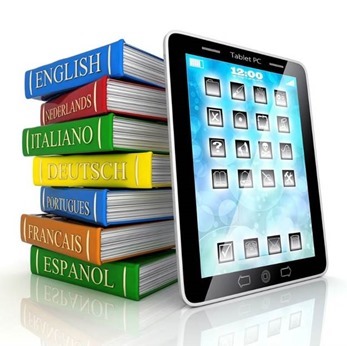
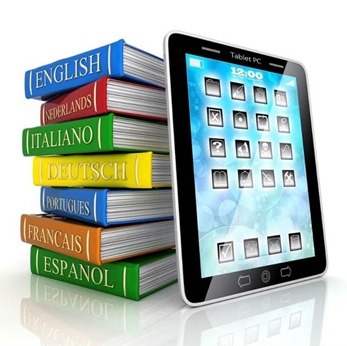
    Whenever it is asked how technology is going to change education, the first thing that comes to majority of people’s mind are mobile devices such as iPads, notebooks and etc. The reason people think of these devices is that they believe in the near future tablets and computer devices will replace books. Perhaps they are not wrong, as most of the educational institutions in Pakistan have introduced mobile devices in their campuses with the same aim. However, future of technology in education is not just about introducing students to latest tablets and computers or using them as replacement for books and note books. Don’t’ take me wrong. I am certainly not against tablets or other mobile devices. In fact, I am one of the tech geeks who love to get their hands on a new device as soon as it hits the market.
    clip_image002

    In spite of it I believe that mobile devices are not the future because it is the nature of technology that it changes very rapidly. Thus, it will be a challenge for institutions and stakeholders to make the new devices available to teachers and students every so often. More importantly, tablets and other mobile devices are just tools which are used by students and teachers to gain education, which has a limited scope. Future of technology, on the other hand, means unlimited possibilities or achieving something that was not achievable before. For instance giving access to anyone, anywhere for both learning and collaboration. It means that future educational institutions will not only have usual cohorts of pupils, but they will also have online students, who are accessing the class by sitting in another country.

    Actually, things have already started moving in this direction, as massive open online courses (MOOCs) are swiftly gaining popularity all over the world. These massive open online courses have really made the world a global village, as they allowed anyone from anywhere in the world to gain high quality knowledge without breaking any geographic barriers. The emergence of MOOCs has increased the importance of smartphones, tablets and computers as well as cloud. The cloud is more like SkyDrive that has enabled students and teachers to find their required data, information like course material, lectures and grade work at any time and from anywhere by simply accessing it. Above all, the MOOCs are offering quality education at very low prices, which is more like a rare commodity that is hard to find now a days.
    clip_image004

    Now that is what I call future of technology that has today completely change the way we use to receive education. It is because of this revolution that now even people in Pakistan can gain international certifications without spending a single penny on visa or passport. Thanks to ninthd (9th D), a Lahore based private concern that has launched international certifications in Pakistan for the very first time. In partnership with UKCET and iCarnegie Global Learning that is a subsidiary of prominent US University Carnegie Mellon.

    These fast track training programmes will be delivered in blended model. It means students can take online lectures and access course materials at anytime from anywhere by simply using tools like smartphones, tablets or PCs. Whereas for collaboration with international and local students small satellite campuses or learning hubs will be setup by ninthd in different parts of Pakistan. On top of it, ninthd has offered economically viable skills (EVS) programmes at unbeatable prices, thanks to technology.
  • Google’s Latest Ambitions with Project Tango

    Google’s Latest Ambitions with Project Tango

    project_tango_logoProject Tango is an attempt by Google to create a mobile device that understands and perceives the world the same way as we do and that shares our sense of space and movement. It is an Android-based prototype 5” phone and developer kit with advanced 3D sensors out of its Advanced Technology and Projects (ATAP) hardware skunk works group. Using its sensors, the phone tracks motion. It can actually build a visual map of rooms using 3D scanning. Google is quite ambitious about this discovery and hopes the combination of these sensors with advanced computer vision techniques will open new windows for indoor navigation, immersive gaming and many more such things.
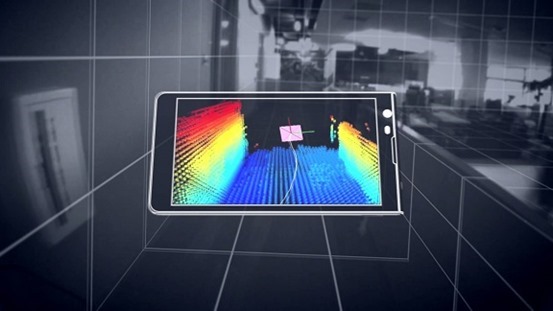
    With Project Tango Google wants to see what kinds of applications developers will dream of for this technology. It will unfold new kinds of smart, vision-based applications based on the 3D sensing and vision technology that is available in the phone. Human beings will be able to create applications that were so far impossible. These phones have a compass and gyros like other phones. Besides that they appear to be Kinect-like visual sensors that can scan the room around the phone. It is also possible to locate where exactly the phone is in space.

    Google uses Movidius Myriad 1 vision processor platform for Project Tango. These sensors were incredibly expensive in the past, they drain the phone’s batteries fast since they are computationally demanding. The latest vision processors use less power and hence Google was able to come up with this project. The ambitious Project Tango is heading to the International Space Station. Two of the Tango phones which would be launched in May 2014 would take supplies to the International Space Station. The phones will be used as part of a NASA project that is developing robots that could one day fly around the inside or outside of the space station, or be used in NASA’s planned mission to land on an asteroid.project-tango

    These phones have several cameras and infrared range-finding which helps the phone build a three dimensional model of its surroundings. This is the major difference Tango phones have from the other phones which can see only a two dimensional world through a single camera. Tango pulls together a few companies which work on cutting-edge technology. It includes a low-powered, vision-processing chip called the Myriad 1 with custom-designed architecture by Movidius. The Myriad 1 is able to power the complex algorithms needed for computer vision without draining the smart phone’s battery. The current smart phone chips cannot do it.

    Google is soon putting Tango in the hands of developers starting with 200 devices. Tango, indeed, has the potential to change many of our lives. This combination of hardware and software would be highly beneficial to vision-impaired human beings. It could also change the state of indoor 3D modeling. Tango video is able to paint the real world in a rainbow-colored 3D map in real time. Tango is a research project which is just launched and there is no clear indication of what the invited developers will do with these sensors. There are many upcoming opportunities and career prospects which would be made use of with this technology. For example, if someone creates a wearable holder that puts Tango on your chest and points out its sensors, it could alert you to danger ahead. It would see an oncoming car or out-of-control bicyclist in front of you and it would vibrate to warn you.

    Google has obtained a lot of coverage by putting the sensor technology in what people recognize- that is, a phone. There are more opportunities which can be developed out of this technology for which people have to spend more time staring at the screen. Tango is precisely a research project this way.

    Author Bio:

    I Harvey, from past years I am really concerted on writing help for students with buy legit essays online with good online support. My experience and expertise have indeed lent a hand for me to write academic coursework such

  • Mobile App Development with Its New Level

    Mobile App Development with Its New Level

    Due to the wide usage of the Internet and related Electronic devices, the platform for Applications are taking into a next level of thinking where mobile Apps are no longer remaining as Mobile Apps with us. Gone are the days when we only have a phone with the purpose of making calls and Texts, then came a time of Multimedia and other related things, the current one is considered to be most sophisticated device in the field of communication called Smartphones.

    With the increasing usage of Apps and numerous technology aspects of Smartphones shown up a way to take it to the next level of Communication called wearable devices. Along with the advancement of Technologies and Apps, the mindset of people is getting improvised and broaden to the level of perceiving things which were unimagined once!

    Now, using the Smartphones are not as flexible as it was once. Tech geeks and majority of the Smartphone users are very much anticipation for the next level of communications and its ways.

    Mobile Apps were developed based on the platform and the nature of the devices and Companies manufacturing it. Because, the Apps developed for Android may not be supported in the devices manufactured by companies doesn’t provide devices for the same.

    App developers should explore the ideas of taking the Apps work to the next level by giving more important to voice-command feature. Developing Apps which is a voice – command oriented will be greatly welcomed as the Smartphones are going into the next level of wrist phones and Glasses in the place of phones. Devices with such nature of technologies will expect the Apps with more about Voice-command features in almost all the Apps. It should be developed in a way where more of Voice command should be used rather than Touch or Texting by using the device. This way, the usage of Smartphones will be reduced enormously in real time scenario and the Convenience of using the devices will take its transformation into the next level of easiness. On top of that, people with blindness will be benefited by it to an incredible level.

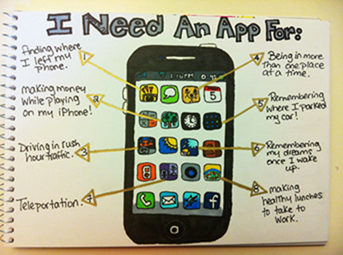
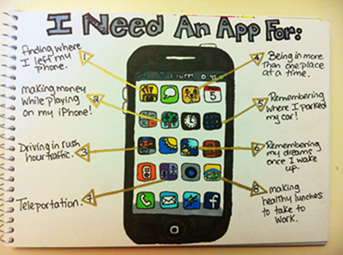
    One Effective way to develop the Apps to fulfill the expectations of users is to do an in-depth research over what the User really wanted in real time from the users’ perspective. An Image below would give an idea as a user simply needs on his phone in terms of Apps.

    clip_image002

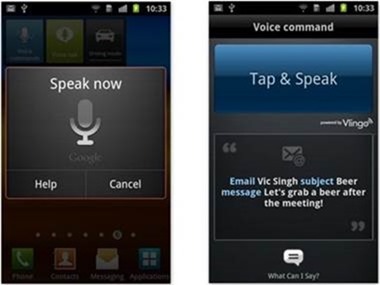
    Imagine a feature of Technology, where all you must do is, asking the phone to open up the Apps and send the messages to right contacts or asking App to download the songs and store it in your favorite folder. It is more of “do it on your own” voice command to phones.

    clip_image004

    Siri was one of the initiatives of such in the industry. Developers can see that an example to develop more Apps of that nature.

    If the more sophisticated Apps are not developed in the near future as per the expectation and needs of the users, perhaps, it will create an option to adapt to other devices like Glasses and Wrist watches of Giant companies which will become the killer of Smartphones eventually.

    The Bottom line is, Nature of Mobile Apps should explore its ways to something we have never experienced, but at the same time, the Human mind has perceived in the subconscious mind. Developers must be keen on developing Apps which will have features and usages beyond the level of user expectations to keep a stand for the longest time in the industry.

    The Author Bio:

    Basheer Ahmed is a passionate technical writer, fervently obsessed with technologies. He is working for MSys Technologies as a senior technical content writer. MSys Technology is an innovator in the field of Test Automation and many other emerging technologies such as Storage, Virtualization, Cloud Computing, Enterprise Applications, Embedded Systems and Communications.

    Follow on Google+ ,Facebook, LinkedIn, Twitter

  • Pop Culture Technologies that Came True

    Pop Culture Technologies that Came True

    Technology is moving at lightning speed, and the next generation of Western children will have no idea what it is like to grow up without the ability to constantly be “online”. But for the older generations, we remember the days of poking holes into two empty soup cans and attaching them with a string in order to talk to someone a few feet away.

    We also remember the films and television shows that conceptualized really cool technology ideas that we wrote off as utter malarkey. Here are some examples of when fiction becomes reality:

    Invisibility Cloak

    No matter how old you were when you read Harry Potter and the Philosopher’s Stone, you wanted to get an Invisibility Cloak too. You would be able to get into places you weren’t supposed to go and overhear conversations you weren’t meant to hear – it would be the perfect tool for mischief!

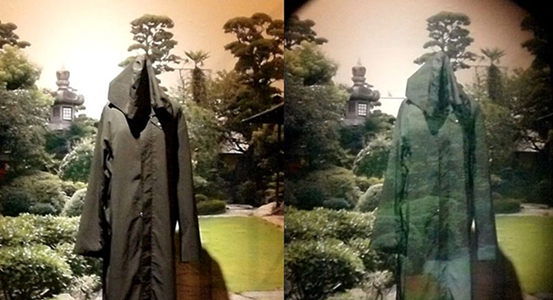
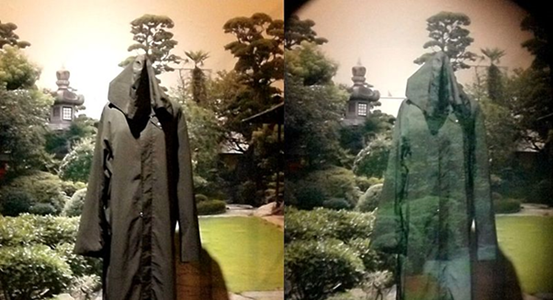
    image

    It’s no longer just a pipe dream: the Tachi Laboratory at the University of Tokyo has developed Optical camouflage using a form of augmented reality, which adds computer-generated content to enhance sensory perceptions. To use this “invisibility cloak” the person who wants to be invisible must wear a special garment made of highly reflective material. A digital camera records what is the behind the subject and then reflects it into a mirror and projects it onto the front of the subject, allowing them to blend in with the background.

    Cloaking created by researchers at the University of Texas at Austin, uses meta-materials to bend light around the subject and return it to its original path. The problem with this method is that it only can be seen from one angle which would be difficult to achieve in natural light. However, it brings us closer to having the real thing.

    Wrap-around Transparent Monitors

    Avatar was one of those amazing films you had to see in theatre. Even if you don’t like 3D films, the way the film used 3D was to add depth of field rather than to throw things at you. It was completely groundbreaking. There is a really cool scene where the camera pans through the office they’re working from and you see the team of scientists and programmers working on a giant transparent screen.

    image

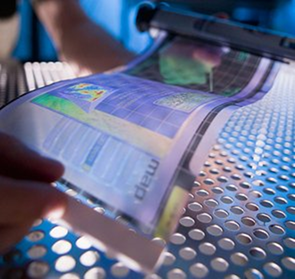
    In 2009, NEC released a model of a curved screen that allowed joining the screens together for a 180-degree (or 360 if you really wanted to) experience. Unfortunately, these monitors are no longer available but similar tech is likely on the way – Plastic Logic is a company that specializes in flexible and bendable displays and Samsung TV released a television that can convert from flat to curved.

    iPad/Kindle

    It’s true: the concept for the iPad had long been imagined well before Steve Jobs presented the idea to the world. In fact, it was British science fiction writer Sir Arthur C. Clarke who described the concept in his 1968 novel 2001: A Space Odyssey.

    He wrote:

    “When he tired of official reports and memoranda and minutes, he would plug in his foolscap-size newspad into the ship’s information circuit and scan the latest reports from Earth. One by one he would conjure up the world’s major electronic papers…Switching to the display unit’s short-term memory, he would hold the front page while he quickly searched the headlines and noted the items that interested him. Each had its own two-digit reference; when he punched that, the postage-stamp-size rectangle would expand until it neatly filled the screen and he could read it with comfort. When he had finished, he would flash back to the complete page and select a new subject for detailed examination…”

    He worked with Stanley Kubrick (director of A Clockwork Orange) to create the film in 1968 in which they produced the first visualization of an electronic pad that allowed users to read the newspaper and other documents. The device, pictured above, was referred to as Newspad. The Apple iPad and the new Kindle fire look an awful lot like it – coincidence?

    Interactive Windshield

    We saw it in Mission Impossible 4: Ghost Protocol – Tom Cruise and Paula Patton driving in the BMW i8 with futuristic user interface that allows you to get directions that are displayed directly on to your windshield. It was multi-touch and highly interactive – another example of augmented reality where a computer adds valuable information to what already exists.

    image

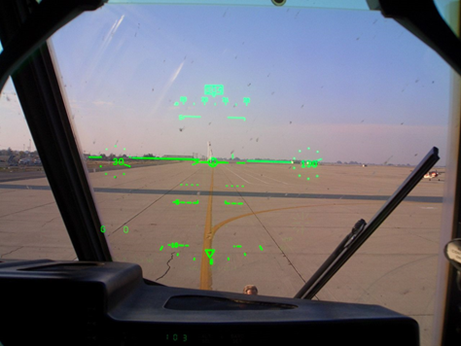
    Technology firm Harman released an augmented reality windscreen in 2013 at the Geneva Motor Show. The screen would provide important information to the driver in a way that is not distracting and can be moved away by swiping your hand. BMW also currently has a head-up display technology in their top-range vehicles that replaces the traditional dashboard by displaying data on the windshield. It isn’t touch screen and it doesn’t have a cool UI, but it’s color coded, interactive and it is on the windshield. 

    Video Conferencing

    It’s impossible to write one of these blog posts without referencing the quintessential futuristic technology film: Back to the Future II. This film takes place in 2015 and in the film older Marty McFly’s boss is Japanese and he meets with him via video conference, which was apparently a very popular thing for old television shows and movies to predict. In the cartoon The Jetsons, they used a giant video-phone system called the Visaphone – though that show was set in 2062.

    Skype was founded in 2003 – well ahead of 2062 and 2015 – and has become one of the most common forms of international communication.

    There are actually a lot of technology predictions Back to the Future II made and got right. The only question is: where is my hover board?!

    About the author

    Verena blogs about gadgets and technology, covering everything from the latest mobile advancements to display technology. When she’s not online Verena enjoys swimming, cycling and travelling the world.

  • Few Smartphone Predictions for New Year 2014

    Few Smartphone Predictions for New Year 2014

    Last year we witnessed a large number of mobile technologies including high resolution 1080P displays, quard core processors, professional DSLR etc. So, what in store for the 2014? Here are some five predicitions for smartphone technology that might turn out to be true in 2014:

    1. Curved Screen

    In the end of 2013 we heard a lot on curved OLED display for many smart devices, where Samsung’s Galaxy Round and LG’s G Flex introduced how it would look and work, yet each company trails a new form factor in their home nation of Korea but in 2014 mostly will push curved screen devices in western countries too. However, its unclear what the advantage would curved display will carry than that of flat display.samsung-5-inch-curved-youm-prototype

    2. Shift to 64-Bit

    As we all know Apple has indroduced us to Apple A7 SoC, used in newly released Iphone 5s, iPad mini and iPad Air. It was also the first ARM chip introduced to consumer devices with 64-bit address and as the news spread, companies such as Qualcomm and Samsung rapidly blench into action, revealing their next SoC’s would be 64-bit capable and based on ARMv8-A structure. However, few of like the Snapdragn 410 are proved not to be a high-end chip, where Cortex-A53 is the succesor to that of Cortex-A7 that means It won’t be as powerful as Cortex-A15 or other ARM CPU cores, However, it is scheduled for release in second half of 2014 for smartphones

    3. Display Beyond 1080p

    We witnessed amazing screen displays with 1080p resolution but can you think beyond? Well many people said 720p to 1080p was a benifit. However, progessing higher to 1920×1080 seems to have lesser benifits as 1080p already look like paper. In spite of this fact, companies like Samsung and LG are looking ahead for 2560×1440 display and in 2014 we’re likely to see few handsets with this feature.

    4. More Operating Systems

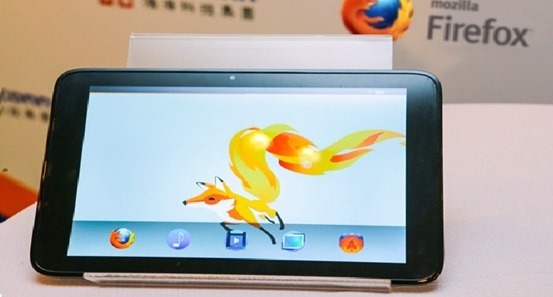
    Although android has occupied a major chunk of the mobile OS, same will carry in 2014 but likely there would be more to add-up with the launch of few more operating systems with something different, or promising to change the way we use mobile devices. However, many of them will be Linux variants and would be targeting low-end devices which yet to be exploited. Some like Firefox OS, Sailfish OS, BlackBerry 10, Ubuntu Touch, Tizen and many others we have heard in 2013. But still Android, iOS and Windows phone will remain the big dogs for time to come however, they too will keep on bringing some innovation in their devices to give good competition to their competitors.


    CES 2014: Mozilla Premiers Firefox OS Tablet Developer Program


    5. Cheaper Is Better

    All the companies have tried their best to offer decent hardware at a low price and the Google Nexus 5 was up with fantastic display for just $350, and the Nexus 7 also proved once again thta 7-inch tablet can be cheaper and same did the Moto G. Well, let’s not forget the Windows phone either, where Nokia’s Lumia 520 was tagged with one of the bestselling smartphones of the year. However, same in 2014 Google’s camp will continue with the cheap Nexus devices as they have much more to offer with the new Android 4.4 KitKat too.


    Author Bio

    This guest article has been composed by Christy Root who works for Prepaymania and, who writes Guest Articles, Press Releases for Mobile Phones. She loves to update herself with different mobile technologies.