Technology is moving at lightning speed, and the next generation of Western children will have no idea what it is like to grow up without the ability to constantly be “online”. But for the older generations, we remember the days of poking holes into two empty soup cans and attaching them with a string in order to talk to someone a few feet away.
We also remember the films and television shows that conceptualized really cool technology ideas that we wrote off as utter malarkey. Here are some examples of when fiction becomes reality:
Invisibility Cloak
No matter how old you were when you read Harry Potter and the Philosopher’s Stone, you wanted to get an Invisibility Cloak too. You would be able to get into places you weren’t supposed to go and overhear conversations you weren’t meant to hear – it would be the perfect tool for mischief!
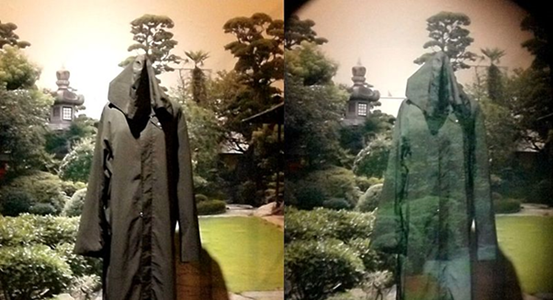
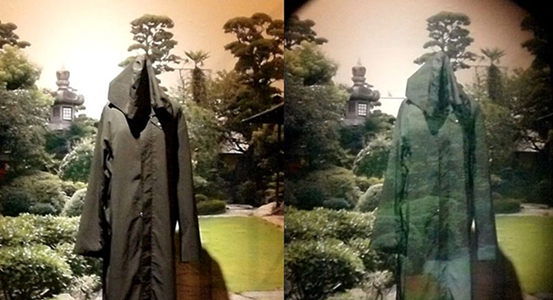
It’s no longer just a pipe dream: the Tachi Laboratory at the University of Tokyo has developed Optical camouflage using a form of augmented reality, which adds computer-generated content to enhance sensory perceptions. To use this “invisibility cloak” the person who wants to be invisible must wear a special garment made of highly reflective material. A digital camera records what is the behind the subject and then reflects it into a mirror and projects it onto the front of the subject, allowing them to blend in with the background.
Cloaking created by researchers at the University of Texas at Austin, uses meta-materials to bend light around the subject and return it to its original path. The problem with this method is that it only can be seen from one angle which would be difficult to achieve in natural light. However, it brings us closer to having the real thing.
Wrap-around Transparent Monitors
Avatar was one of those amazing films you had to see in theatre. Even if you don’t like 3D films, the way the film used 3D was to add depth of field rather than to throw things at you. It was completely groundbreaking. There is a really cool scene where the camera pans through the office they’re working from and you see the team of scientists and programmers working on a giant transparent screen.
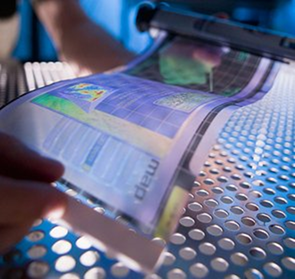
In 2009, NEC released a model of a curved screen that allowed joining the screens together for a 180-degree (or 360 if you really wanted to) experience. Unfortunately, these monitors are no longer available but similar tech is likely on the way – Plastic Logic is a company that specializes in flexible and bendable displays and Samsung TV released a television that can convert from flat to curved.
iPad/Kindle
It’s true: the concept for the iPad had long been imagined well before Steve Jobs presented the idea to the world. In fact, it was British science fiction writer Sir Arthur C. Clarke who described the concept in his 1968 novel 2001: A Space Odyssey.
He wrote:
“When he tired of official reports and memoranda and minutes, he would plug in his foolscap-size newspad into the ship’s information circuit and scan the latest reports from Earth. One by one he would conjure up the world’s major electronic papers…Switching to the display unit’s short-term memory, he would hold the front page while he quickly searched the headlines and noted the items that interested him. Each had its own two-digit reference; when he punched that, the postage-stamp-size rectangle would expand until it neatly filled the screen and he could read it with comfort. When he had finished, he would flash back to the complete page and select a new subject for detailed examination…”
He worked with Stanley Kubrick (director of A Clockwork Orange) to create the film in 1968 in which they produced the first visualization of an electronic pad that allowed users to read the newspaper and other documents. The device, pictured above, was referred to as Newspad. The Apple iPad and the new Kindle fire look an awful lot like it – coincidence?
Interactive Windshield
We saw it in Mission Impossible 4: Ghost Protocol – Tom Cruise and Paula Patton driving in the BMW i8 with futuristic user interface that allows you to get directions that are displayed directly on to your windshield. It was multi-touch and highly interactive – another example of augmented reality where a computer adds valuable information to what already exists.
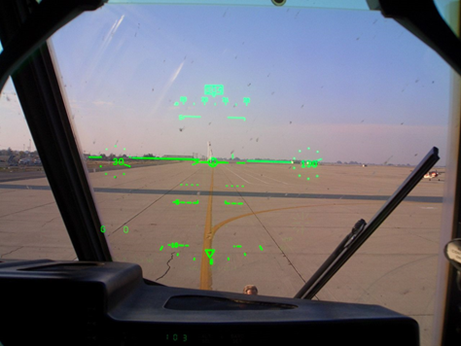
Technology firm Harman released an augmented reality windscreen in 2013 at the Geneva Motor Show. The screen would provide important information to the driver in a way that is not distracting and can be moved away by swiping your hand. BMW also currently has a head-up display technology in their top-range vehicles that replaces the traditional dashboard by displaying data on the windshield. It isn’t touch screen and it doesn’t have a cool UI, but it’s color coded, interactive and it is on the windshield.
Video Conferencing
It’s impossible to write one of these blog posts without referencing the quintessential futuristic technology film: Back to the Future II. This film takes place in 2015 and in the film older Marty McFly’s boss is Japanese and he meets with him via video conference, which was apparently a very popular thing for old television shows and movies to predict. In the cartoon The Jetsons, they used a giant video-phone system called the Visaphone – though that show was set in 2062.
Skype was founded in 2003 – well ahead of 2062 and 2015 – and has become one of the most common forms of international communication.
There are actually a lot of technology predictions Back to the Future II made and got right. The only question is: where is my hover board?!
About the author
Verena blogs about gadgets and technology, covering everything from the latest mobile advancements to display technology. When she’s not online Verena enjoys swimming, cycling and travelling the world.
 Regardless of the race, people have a soft heart on movie viewing. Movies have long been helping people see the world in different light. Unconsciously, it is bridging some cultural and distance gaps between nations. Yet, as a usual scene in life, there are ones made in lesser taste.

 It was kind of the big eye opener “Aha!” inches moment to actor trademarks. While watching the trailer for the upcoming Wolf of Wall Street, there is one moment where DiCaprio is rearing his glass of wine over a yacht. Having just watched both Great Gatsby and Django Unchained. Then considering back, it was additionally in Titanic and also the Man in this Iron Mask. In reality, the only DiCaprio videos we couldn’t recall seeing it in was The Beach and Inception, but Perhaps living the simple life over a hidden beach went by Thai weed farmers or hopping by means of dreams doesn’t afford long to be most classy.
 Where Leonardo DiCaprio’s hallmark is glass raising, Tom Hanks makes his mark around the world with urine. The obsession started in 1986 in The Money Pit, just when Tom Hanks was beginning to get some bigger motion pictures roles. The plumbing is on the fritz inside your home so naturally Tom Hanks goes toward take a leak from the front porch where he or she notices the statue is having “prostate problems”, much like he would later have in the Green Mile (though actually that had been a urinary tract infection). Tom Hank’s pee obsession remains in Big, A League of Their unique (where he really seems to find yourself in it), Forest Gump, Saving Private Ryan, Castaway, The ‘Burbs, Road to Perdition and Apollo 13.
 When would be the last time you saw the most notable of Johnny Depp’s scalp? Possibly never unless you seriously stalk some Depp crafted celebrity gossip. Regardless, in his movies it has been many years. He better watch that or people are going to suspect that he has a big old bald spot on Johnny Depp hats which noggin somewhere. However, it wouldn’t really matter considering the vast majority of his roles demand he wear some sort of silly or creepy wig lately. However, Depp’s penchant for hats isn’t just a movie thing possibly. He seriously has a passion for them in real life too. It makes one wonder if on the list of questions he asks in regards to prospective movie is, “Does it have a hat in it for me?” bet that’s how he became such people with Tim Burton.
 Unlike most actors, Tom Cruise is a fantastic sprinter, presumably because that’s of having he knows how to advance from place to place.
 There are two things that an audience can go into watching a Sean Bean film–some great acting and he is probably going to die. At this point, it might be faster to list of the films that he has lived through. Bean has be sliced, shot, fallen over a cliff, hung, drown, killed himself, blown up, crushed, and killed in almost every way imaginable. In fact, there are now sites dedicated to his many deaths. Sean Bean sets himself up for many of these by being the character that audiences can sympathize with, making it devastating when he is killed.