Tag: Price

  • HTC launches Desire 500 with android 4.2

    HTC launches Desire 500 with android 4.2

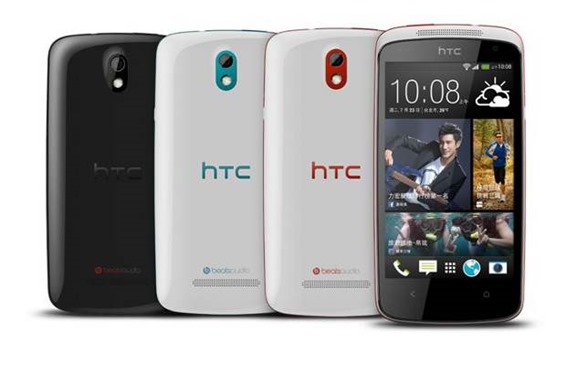
    htc-desire-500HTC has been aggressively launching smartphones all around the globe that include devices under its One and Desire series. Following the strategy, the company has launched Desire 500 in Taiwan. The device is said to be targeted at the younger consumers and is considered a mid-ranged smartphone.

    The quad core CPU based Desire 500 is likely to be priced under Rs 25,000 in India.

    The HTC Desire 500 is powered by 1.2GHz Qualcomm Snapdragon200 quad-core processor coupled with 1GB of RAM. It features a 4.3-inch WVGA display with a resolution of 480×800 pixels. The phone measures 131.8×66.9×9.9mm and weighs 123g. There is 4GB internal storage that can be further expanded up to 64GB with the help of microSD card. An 8-megapixel rear camera can be found at the back accompanied by an LED flash and a 1.6-megapixel front camera. The device can record videos at 720p and also features Beats Audio.

    HTC Desire 500 comes with a 1,800mAh battery that the company claims will deliver 17.8 hours of talk time and 401 hours of standby time. The HTC Desire 500 runs on Android 4.2 with Sense 5 on top and other features like BlinkFeed. However, the HTC Desire 500 does not include BoomSound which has been a part of HTC One series and features dual front speakers at the front panel.

    HTC Desire 500 is priced at NT$11,900 (approx. Rs. 24,000). There is no word yet about pricing and availability in markets other than Taiwan.

    HTC Desire 500 key specifications

    • 4.3-inch WVGA display with a resolution of 480×800 pixels
    • 1.2GHz Qualcomm Snapdragon200 quad-core processor
    • 1GB RAM
    • 4GB internal storage, expandable up to 64GB by microSD card
    • 8-megapixel rear camera with LED flash
    • 1.6-megapixel front facing camera
    • Android 4.2 Jelly Bean with HTC Sense 5
    • 1800mAh battery
  • Nokia Lumia 1020 with 41 MP Camera

    Nokia Lumia 1020 with 41 MP Camera

    nokia-lumia-1020While initially the phone was rumoured to be named Nokia 909, Nokia launched the device as Nokia Lumia 1020. The phone comes with a 41 MP Nokia PureView camera and Xenon flash. While the phone is a successor to Nokia PureView 808 which also features a 41 MP cam and a Xenon flash, Nokia has provided some commendable upgrades to the Lumia device.
    Picture 2900Camera aside, the Lumia 1020 is largely unchanged from the specifications of Nokia’s Lumia 920 and 925. Nokia is adding 2GB of RAM instead of 1GB, and it’s opting for a 4.5-inch AMOLED display like the Lumia 925. There’s some microphone improvements, but the device will run the same 1.5 Ghz dual-core S4 processor as the 920 and 925. One change is the dimensions. The camera is obviously rather large on the rear, but Nokia has managed to keep the device thinner and lighter than the 920. It’s not as slimline as the 925, but it’s 10.4 mm thick and weighs 158g.

    The 41-megapixel Pureview sensor includes optical image stabilization, 6-lens Zeiss optics, and a xenon flash, making it the centerpiece for the rear of the phone. It can shoot still images at 38-megapixel in 4:3 and 16:9 aspect ratios. At the same time as it captures the high-resolution images, it also takes an oversampled 5-megapixel image using the sensor that can then be easily shared thanks to its smaller file size. The Lumia 1020 supports 1080p video capture, complete with 4x zoom and up to 6x at 720p. Nokia is releasing a Pro Camera app with the Picture 2772Lumia 1020 to take advantage of the sensor and manually adjust flash, focus, ISO, white balance, shutter speed, and exposure. It also includes a number of editing functions to crop and alter photos. Nokia is bundling a leather wrist strap with the Lumia 1020, making it even more point-and-shoot-like, but a optional Camera Grip accessory provides a casing for the device with extra battery, a shutter button, and even a tripod mount.

    Whether its outer casing will be metal or polycarbonate remains to be seen, although the Finnish company’s previous high-end device the Lumia 925 sported a metallic chassis and soft-touch rear.

  • Micromax Canvas 4 launched for Rs 17,999

    Micromax Canvas 4 launched for Rs 17,999

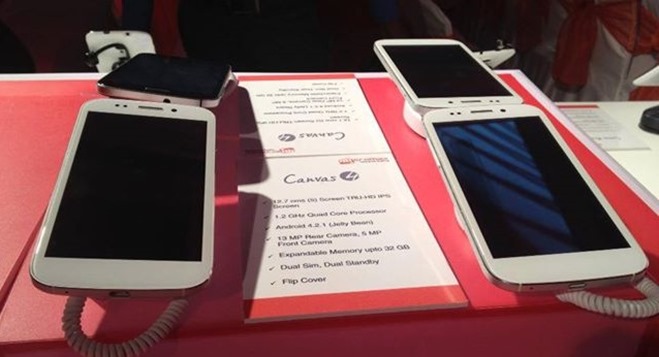
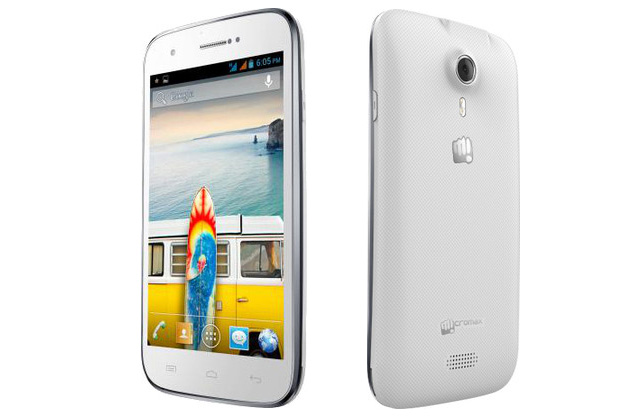
    canvas-4-priceAfter a massive marketing campaign that included televised ads, Micromax has launched the Canvas 4  price for Rs 17,999. Micromax opened pre-orders for the smartphone on June 28 and in the lead up to the launch it has amassed 11,500 pre-bookings.

    The Canvas 4 has a 5-inch HD IPS display and comes in an aluminium casing that also doubles up as an antenna. Micromax says that touchscreen is optimised for use even while wearing gloves.

    The phone is powered by a Cortex A7 1.2 GHz quad-core processor and but doesn’t run on the latest version of Android Jelly Bean, but instead comes with its predecessor Android 4.2.1.

    The phone has 1GB RAM and an internal storage of 16GB.

    Micromax A92 Canvas Lite Now Available For Rs 8,499

    Design wise, it actually seems to be a rebadged version of the BLU Life One and it is actually a step up for Micromax in terms of build quality. It has an aluminium band that wraps around a plastic front and back, and it flaunts iPhone 5 like chamfers.

    It has a microSD card slot and has 16GB of user internal memory, of which about 10GB is available to users. Like most Micromax phones it is a dual-SIM smartphone and has a 2,000 mAh battery.

    One of the unique features of this phone is Blow to Unlock, wherein you essentially blow a kiss to your phone to unlock it (yes, that’s an actual feature). Other, more sensible features include video pinning to pin videos on the homescreen and look away to pause video, stuff that’s straight out of Samsung’s TouchWiz. You can also turn the phone down during a call and it automatically switches to loudspeaker mode It also comes with a special aluminium cover that’s worth Rs 3,000 which is part of the package.

  • LG Optimus G Pro launches at Rs.42,500

    LG Optimus G Pro launches at Rs.42,500

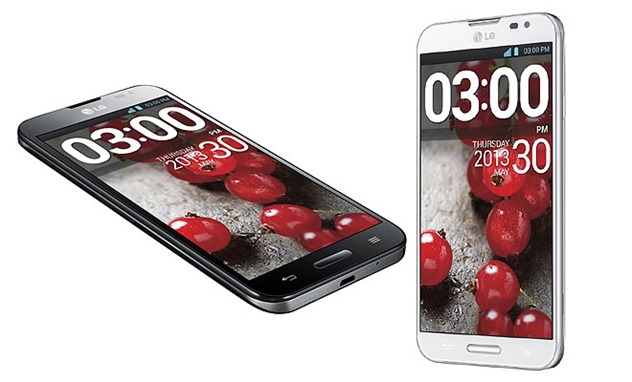
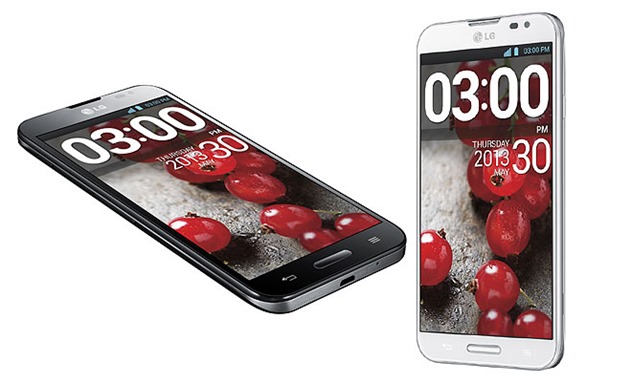
    LG_Optimus_G_ProLG launched their Galaxy Note II competitor phablet LG Optimus G Pro in India today and the phone definitely packs a punch! LG Optimus G Pro is definitely a premium gadget but comes with specifications to match the price and the hype.

    With this launch, the company has entered into the high-end smartphone segment ranging around Rs 40,000, eyeing a slice of the share from competitors like BlackBerry, Samsung, Sony and Apple’s iPhone.

    LG Optimus G Pro price in india Rs 42,500

    Reports suggest that LG is working on a long term strategy for India. With a solid investment of Rs 80 crore to push its sales in the Indian market, LG’s Optimus Pro G runs on Android Jellybean v4.1.2 operating system and is powered by a 1.7 GHz Qualcomm Snapdragon 600 quad-core processor. The smartphone has a 5.5 inch full HD IPS display, which carries the DNA of LG’s high definition TVs. This model has a pixel density of 400ppi, one of the highest in the market. The device has 2GB RAM and an internal memory of 16 GB. Equipped with 4G LTE, LG Optimus G Pro has the battery capacity with 3,140 mAh with an improved 13 MP rear and 2.1 MP front Full HD camera. The smartphone boasts dual recording that captures video with both the front and rear cameras simultaneously and virtual reality panorama feature allowing 360 degree viewing, from taking pictures of both horizontal and vertical environment. The UX features popular with Optimus G users have been added to the Optimus G pro, such as upgraded Q Slide, Live Zooming and Quick Memo. Other features in the smartphone include Q Remote, Audio Zoom, Video Wiz, Magic Remote Pad.

    Soon Kwon, Managing Director, LG India said, “Smartphone market in India is growing rapidly and there is a huge demand for big screen size mobile phones. The market size for 5 inch and above screens is expected to be 1.5 million units by end of 2013. With this launch we are gearing towards our aim of capturing 10% market share of the smartphone category by end of 2014.”

    LG Optimus G Pro Specs

    – Chipset: 1.7GHz Quad-Core Qualcomm Snapdragon 600 Processor
    – RAM: 2GB DDR
    – Memory: 32GB / microSD (up to 32GB)
    – Display: 5.5-inch Full HD (1920 x 1080 pixels / 400ppi)
    – Camera: Rear 13.0MP with LED Flash / Front 2.1MP
    – OS: Android 4.1.2 Jelly Bean
    – Battery: 3,140mAh (removable / wireless charging capable)
    – Size: 150.2 x 76.1 x 9.4mm

  • Samsung Galaxy note 3 on Sept. 4 with 3GB Ram, octa-core processor

    Samsung Galaxy note 3 on Sept. 4 with 3GB Ram, octa-core processor

    This is a heart-warming news for many Sammy fans. Samsung Galaxy note 3 release date is set for Sept. 4 and specs include 3GB Ram, octa-core processor and FullHD display

    Korean tech giant Samsung’s next generation version of its top selling phbalet Galaxy Note 3 is all set to be introduced in the market next month. The phablet that is being talked about as the next big thing following the introduction of the flagship handset of the company is expected to come with a slightly bigger display compared to 5.5 inch display size of the current version Galaxy Note 2.

    Galaxy Note 3 will ship with the same 13-megapixel camera as the Samsung Galaxy S4.

    Pricing on the Samsung Galaxy Note 3 is yet to even be rumoured, but we think it will probably be more expensive than the Galaxy Note 2. After all, the screen is much larger.

    Taking the price change between the 5-inch Galaxy Note and 5.5-inch Galaxy Note 5-inch into account,

    The phablet will come loaded with Exynos 5 octa-core processor, Mali 450 GPU with 8 cores and 3GB of RAM. The combination of these is going to make the phablet the best of all in the market.

  • Micromax A92 Canvas Lite Now Available For Rs 8,499

    Micromax A92 Canvas Lite Now Available For Rs 8,499

    The price tag is 8,499. The smartphone has features such as 12.7-cm (5-inch) TFT capacitive touch screen display with a resolution of 480X854 pixels.

    It boasts of 1GHz dual-core processor apart from 512MB of RAM. In addition to it, the smartphone has 4GB of internal storage with 0.94GB being user accessible. Moreover, the storage can be increased to 32GB through microSD card. A dual-SIM GSM+GSM smartphone, connectivity options include 3G, Wi-Fi 802.11 b/g/n, Bluetooth and GPS.
    It has a 5 megapixel auto focus camera with LED flash, where the camera can record videos at 30 fps. But, there is no front camera for sure.
    Running on Android 4.1 (Jelly Bean), it has G-Sensor, light sensor and proximity sensor. The smartphone measures 77X147X10.8 mm and is powered by a 2,000mAH battery. According to the company, it provides 6 hours of talk time and 240 hours of standby time on 2G network.

  • Samsung Galaxy Grand Review

    Samsung Galaxy Grand Review

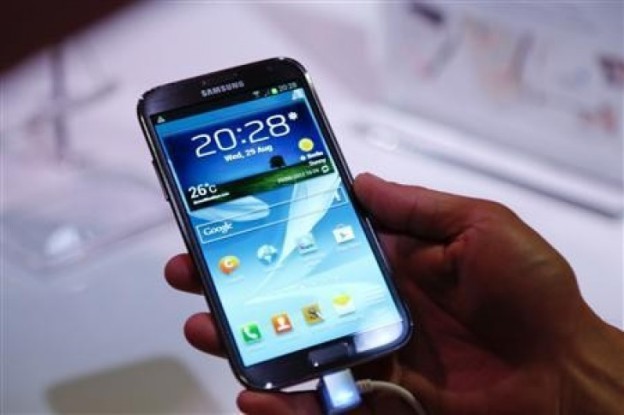
    The Galaxy Grand is Samsung’s attempt to woo those who can’t afford a top-end device like the Galaxy Note II.
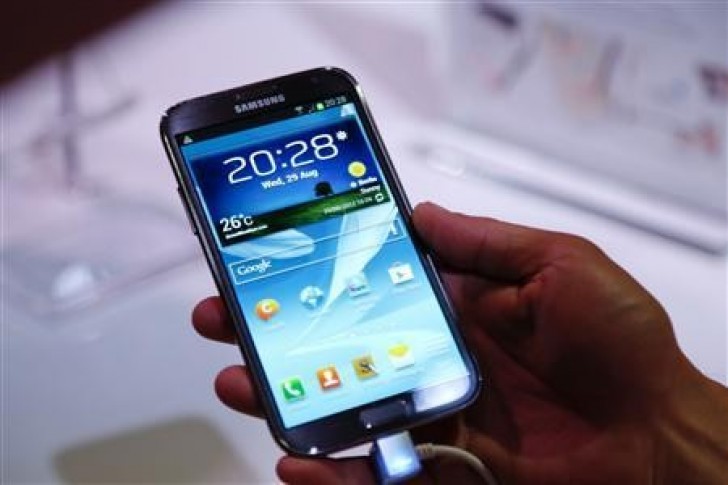
    b7a77b0ac0ab4caaefed02b0d5faa241_XLThe Galaxy Grand is Samsung’s attempt to woo those who can’t afford a top-end device like the Galaxy Note II.

    Price approx Rs 21,500

    Which is almost twice as expensive as its low-cost rivals, but it’s the most-affordable option if you’re looking for a device from a tier 1 brand. Currently, the Galaxy Grand doesn’t face any competition from other tier 1 brands, but you may want to know how much better it is than the low-cost devices that offer similar specifications. Here’s a breakdown of the specifications to give you an idea how it compares with the closest competition.

    A large-screen handset for those who can't afford the Galaxy Note II

    A large-screen handset for those who can’t afford the Galaxy Note II

    OS – Android 4.1.2 Jelly Bean

    Very few current-generation low-cost Android phablets come preloaded with Android Jelly Bean; most of them come with Android ICS—however, you get the OS in the stock form. The Galaxy Grand runs Jelly Bean out of the box and not to mention, it boasts features found in the higher-end Galaxy handsets, such as Smart Stay, Pop up Play and Direct Call.

    Cellular network – Dual SIM GSM and 3G 

    The Galaxy Grand is the first phablet from a tier 1 brand to offer dual-SIM capability in the sub-Rs 20,000 price band. Quad-band 2G is supported by both the SIM card slots, whereas 3G connectivity is supported only in the SIM1 slot.

    Display – 5-inch WVGA

    An HD display would have made the Galaxy Grand a killer deal, but unfortunately, it sports a 5-inch WVGA display that has a resolution of 480 x 800 pixels. On the other hand, you have the Micromax Canvas HD with a 720p IPS LCD. The pixel density of Galaxy Grand’s display is 187 ppi as against 294 ppi in the Canvas HD—that’s a difference of a good 107 ppi or 57 percent in density! That doesn’t mean it’s bad; there’s ample real estate for viewing web pages and documents comfortably and videos are enjoyable on the large 5-inch display.

    Quite slim at 9.6mm

    Quite slim at 9.6 mm

    Form factor and weight – a tad lighter than the Note II

    Weighing in at 162 grams, Galaxy Grand is 20 grams lighter than Note II. It’s also a few millimetres less in height and width, but the Note II is slimmer than the Grand by a fraction of a millimetre.

    Wi-Fi – Dual-band, 802.11 ‘n’

    Like the Nokia Lumia 620, the Galaxy Grand is one of the few handsets in its segment to feature dual-band Wi-Fi ‘n’. So, if your router supports 5GHz wireless band, you can harness much faster connectivity.

    SoC

    This is grey area and we shall be able to give a clear picture only when we get our hands on the device. We got in touch with Samsung for exact details of the SoC this device uses, but we didn’t get any answer. For now, we can only say it’s powered by a 1.2GHz dual-core processor. According to one source who captured a glimpse of the Galaxy Grand at the Broadcom booth at the CES 2013, it’s quite evident that it’s powered by the Broadcom BCM28155 SoC. It comprises a pair of ARM Cortex-A9 cores and Broadcom’s own VideoCore-IV graphics engine for 2D and 3D acceleration.

    Storage – 8GB with the option to expand by up to 64GB

    Here, Galaxy Grand has an upper hand over Micromax Canvas HD. Firstly, Galaxy Grand packs 8GB of built-in storage, which is twice as much as in Canvas HD. And secondly, in contrast to microSD expansion of up to 32GB in Canvas HD, Galaxy Grand can take up to a 64GB microSD card.

    8 megapixel camera with autofocus and LED flash

    8 megapixel camera with autofocus and LED flash

    Primary camera – 8MP with LED flash

    The 8MP primary camera featured in the Galaxy Grand has the same resolution as the one featured in Note II. There’s LED flash and digital image stabilisation to help you take clear shots in low light. Videos can be recorded at 1080p at 30fps. The Canvas HD too features an 8MP camera with LED flash, but only our hands-on tests will reveal which of the two takes better photos. Also, the secondary front camera in the Galaxy Grand is a 2MP one as against the VGA camera in the Canvas HD.

    Sensors – Gyro, compass and more

    The Galaxy Grand comes armed with sensors that will be of most use to the end user—accelerometer, gyro, proximity and compass. The list excludes barometer, but it’s fair for an entry-level phablet.

    Battery – Li-ion 2100mAh

    Both, the Galaxy Grand and Canvas HD feature a hefty 2100 Li-ion mAh battery to provide decent amount of talk time in addition to fuelling other tasks such as media playback, web browsing, gaming and so on. The Note II packs a 3100 mAh battery and it lasted for over two days without the need for a charge. Test revealed it played a 720p video in loop for over 12 hours without any hiccup.

    The bottom line

    Off late, we’ve seen many low-cost Android phablets (such as Micromax Canvas 2 and Lava Iris 501) featuring a dual-core processor, 512MB RAM, 4GB of internal storage and at least a 5 megapixel camera—you can buy one for around Rs 11,000. Cough up another few thousand rupees and you can buy a more feature rich device like the Canvas HD. However, if you’re reluctant to consider a lower-tier brand and don’t want to look beyond top-tier brands, the Galaxy Grand is for you. The specifications look good on paper, and the price point is sweet!