Category: Tech

  • HTC launches Desire 500 with android 4.2

    HTC launches Desire 500 with android 4.2

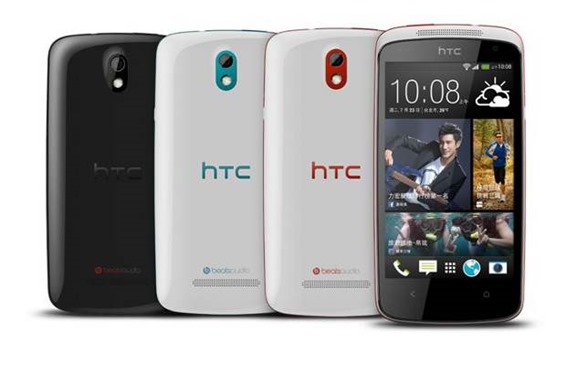
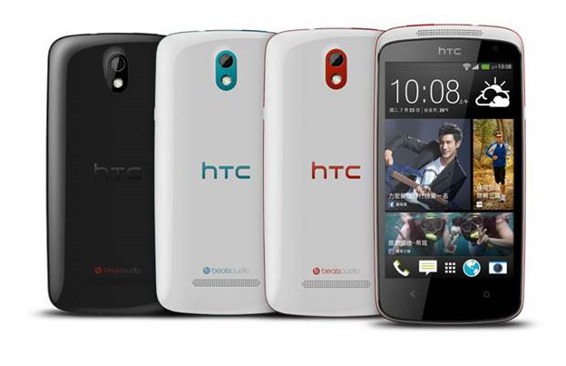
    htc-desire-500HTC has been aggressively launching smartphones all around the globe that include devices under its One and Desire series. Following the strategy, the company has launched Desire 500 in Taiwan. The device is said to be targeted at the younger consumers and is considered a mid-ranged smartphone.

    The quad core CPU based Desire 500 is likely to be priced under Rs 25,000 in India.

    The HTC Desire 500 is powered by 1.2GHz Qualcomm Snapdragon200 quad-core processor coupled with 1GB of RAM. It features a 4.3-inch WVGA display with a resolution of 480×800 pixels. The phone measures 131.8×66.9×9.9mm and weighs 123g. There is 4GB internal storage that can be further expanded up to 64GB with the help of microSD card. An 8-megapixel rear camera can be found at the back accompanied by an LED flash and a 1.6-megapixel front camera. The device can record videos at 720p and also features Beats Audio.

    HTC Desire 500 comes with a 1,800mAh battery that the company claims will deliver 17.8 hours of talk time and 401 hours of standby time. The HTC Desire 500 runs on Android 4.2 with Sense 5 on top and other features like BlinkFeed. However, the HTC Desire 500 does not include BoomSound which has been a part of HTC One series and features dual front speakers at the front panel.

    HTC Desire 500 is priced at NT$11,900 (approx. Rs. 24,000). There is no word yet about pricing and availability in markets other than Taiwan.

    HTC Desire 500 key specifications

    • 4.3-inch WVGA display with a resolution of 480×800 pixels
    • 1.2GHz Qualcomm Snapdragon200 quad-core processor
    • 1GB RAM
    • 4GB internal storage, expandable up to 64GB by microSD card
    • 8-megapixel rear camera with LED flash
    • 1.6-megapixel front facing camera
    • Android 4.2 Jelly Bean with HTC Sense 5
    • 1800mAh battery
  • ZTE debuts in India with six new smartphones

    ZTE debuts in India with six new smartphones

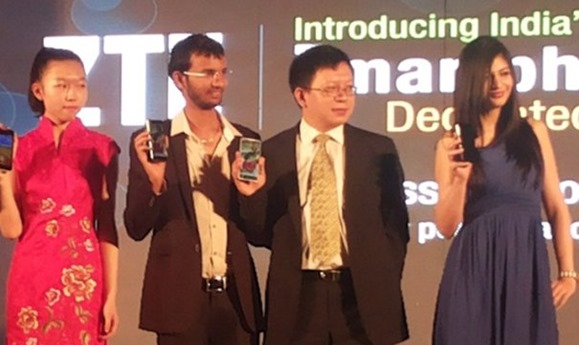
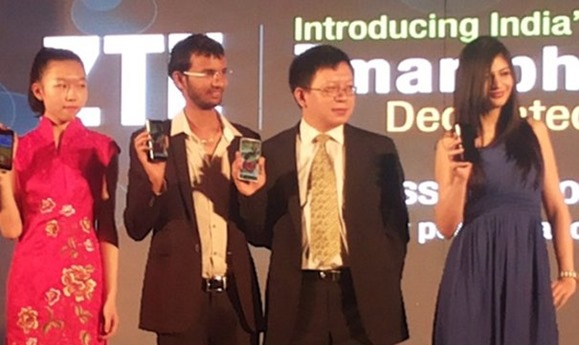
    zte-india-launchChinese handset giant ZTE on Friday made its debut in Indian handset market in a big way launching six new Android smartphones priced between Rs. 5,000 and Rs. 15,000.


    ZTE is a Chinese smartphone making company and is the fourth largest handset manufacturer in the world. It’s mid-range and low-range phones could be direct competition to direct players like Micromax, Karbonn, Xolo and others.

    They launched six smartphone models and four 3G datacards in the market today.

    The smartphones are all priced between Rs5,000 – Rs15,000.

    The six smartphones launched are:
    1. ZTE Grand X for Rs14,999
    2. ZTE Blade G2 for Rs 11,599
    3. ZTE Blade C for Rs7,599
    4. ZTE Blade L for Rs 12,599
    5. ZTE Kis Flex for Rs 5,799
    6. ZTE Blade E for Rs11,999

    Thr premium phone in the bag is the ZTE Grand X which comes with a 1.2 GHz quad core processor. It has a 1GB RAM and 4GB  of internal memory. External memory can be extended upto 32GB.

    It is priced at Rs14,999. It will not hit the stores immediately but will be available in the coming days.

    ZTE Grand X Quad Lite key specifications
    * 5-inch display with a resolution of 540×960 pixels
    * 1.2GHz quad-core processor
    * 1GB of RAM
    * 4GB of internal storage
    * 5-megapixel rear camera
    * VGA front-facing camera
    * 3G, Wi-Fi, Bluetooth 4.0, GPS and wireless charging
    * 2500mAh battery
    * Android 4.2 (Jelly Bean)

    All the six phones run on Google’s Android operating system.

    “In the first year, we will just demonstrate the products and introduce new devices in India. Going ahead, we are sure that we will have a 20-25 per cent share of the smartphone segment in the next 3-4 years, given the quality and features of our products,” ZTE India Vice-President (Handsets) Yuan Kang told PTI.

    Speaking on the launch, Xu Dejun, CEO of ZTE India, said, “We offer 214 service centres accross the country to address your greviances. We also have a full fledged Research and Development unit to stay up-to-date with the leading technologies. With in-house manufacturing and RnD, we aim to offer quality products at reasonable prices.”

    “By the year end, we aim to have our pan India presence with the smartphones and data cards,” he added.

  • What is Alexa and how it works

    What is Alexa and how it works

    alexa_rank_increase

    If you are anywhere in field of web development then you might have heard about alexa traffic rank. Ever wondered what is alexa and how it works? How to boost your alexa traffic rank? Here are few facts about Alexa.

    What is Alexa ?


    Alexa Internet, Inc.
    is a California-based subsidiary company of Amazon.com which provides commercial web traffic data. Founded as an independent company in 1996, Alexa was acquired by Amazon in 1999. Its toolbar collects data on browsing behavior and transmits it to the Alexa website, where it is stored and analyzed, forming the basis for the company’s web traffic reporting. As of 2013, Alexa provides traffic data, global rankings and other information on 30 million websites,and its website is visited by over 10 million people monthly.

    What Alexa do ?

    alexa-logoAlexa analyzes web usage from traffic data sources including their own Alexa Toolbar users to eventually create traffic rankings for websites. This essentially determines how popular a website is. Even though these scores are highly respected in certain circles, the traffic data isn’t a representative sample of the global internet population, but an extensive variety of statistics taken from Alexa Toolbar users.
    What is Alexa traffic rank ?

    The Alexa traffic rank is taken over three months from traffic data of millions of users taking into consideration both the number of users who visit that site and the number of pages which are viewed by that user. So this score can change quarterly depending on the views/visits at that time.  A lower Alexa number means a greater level of traffic.

    How Alexa traffic rank works ?

    The traffic rank is based on three months of aggregated historical traffic data from millions of Alexa Toolbar users and data obtained from other, diverse traffic data sources, and is a combined measure of page views and users (reach). As a first step, Alexa computes the reach and number of page views for all sites on the Web on a daily basis. The main Alexa traffic rank is based on a value derived from these two quantities averaged over time (so that the rank of a site reflects both the number of users who visit that site as well as the number of pages on the site viewed by those users). The three-month change is determined by comparing the site’s current rank with its rank from three months ago. For example, on July 1, the three-month change would show the difference between the rank based on traffic during the first quarter of the year and the rank based on traffic during the second quarter.

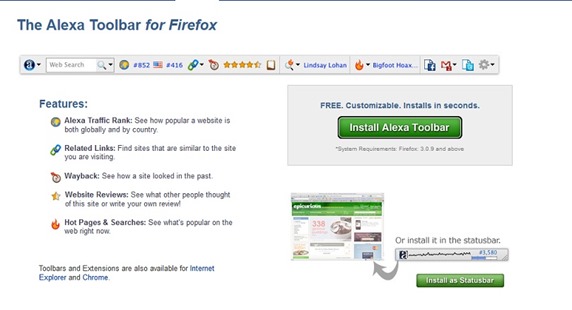
    What is the Alexa toolbar ?

    This is a free tool which you can download that allows you to measure your own traffic and rankings and check out your competitors ranking. How to download and install the Alexa tool bar is very simple.

    Go to Alexa.com/Toolbar  to download the free toolbar for Firefox, Chrome and IE.

    alexa-toolbar-how-to

    This tool bar then shows you two rankings – a rank for the world and a rank for your country.

    This extention is useful because it also gives you a link for search analytics and way back machine link to see view past performances and also the average load time, this compare you to other sites to see how fast your site is loading right there on your toolbar.

    Toolbar Features:
    • Traffic Stats
    • Search Analytics
    • Audience
    • Contact Info
    • Reviews
    • Related Links
    • Clickstream
  • Try Firefox OS in your browser right now !

    Try Firefox OS in your browser right now !

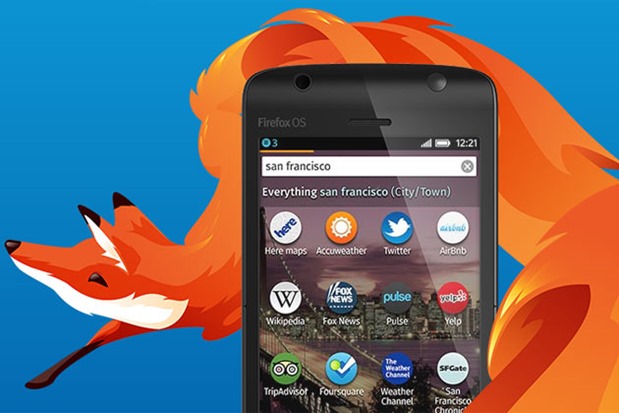
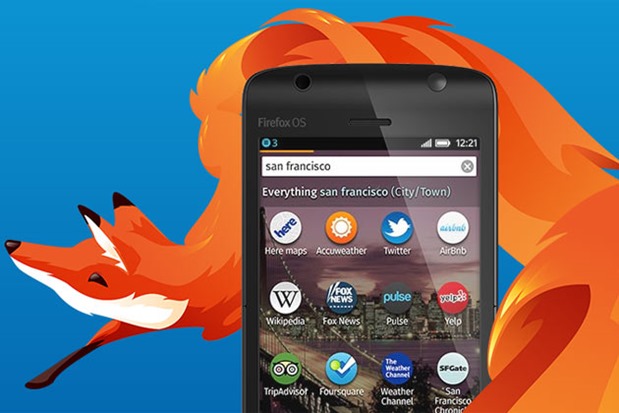
    firefox-os-250213So are you among the curious ones who are desperately waiting for Mozilla to launch the Mozilla OS based smartphone in your country? To cut short this wait, the organisation has now come up with a Firefox OS Stimulator by updating the Firefox OS simulator to version 4. 

    There is still a lot of time left for the Mozilla OS phones to arrive around the globe but you can still feel and test the platform!

    The add-on has the ability to test whether an app properly generates the receipt generated when an app is downloaded from the Firefox Marketplace. It has the ability to completely reset an app by typing Ctrl-R on Windows and Cmd-R on OS X. The command will wipe out all locally stored information.

    Try out the new Future Fox : Australis

    The stimulator is a Firefox browser based add-on which can be installed and used as a testing interface for the new interface. As written on the official blog post by Firefox OS developer advocate, Angelina Fabbro, the add-on have the ability to simulate touch-screen events with mouse clicks, the add-on is a style editor tool that lets programmers create and test CSS formatting.

    Though the browser module have certain limitations as the browser based OS environment can’t test some of the features which needs a real phone. Such as tilting features of phone.

  • Ubuntu 13.10 Wallpaper Contest is On

    Ubuntu 13.10 Wallpaper Contest is On

    ubuntu-wallpaperEver think that your clicked photograph can be on official release of next Ubuntu as wallpaper.?
    The bi-annual competition is open to everyone. So if you think that your photographic prowess or illustrative ideas are good enough to grace millions of users’ desktops this contest offers you the perfect opportunity to prove it.

    Guidelines

    As in the past, submissions are to be collected via a special Ubuntu Wallpaper pool on photo-sharing site Flickr, and only one entry is permitted per-user.

    With this limit in mind here are a few things to consider when taking or selecting an image for your submission:

    • Don’t create busy images, or fill them with too many shapes and colours
    • Use a single point of focus; a single area that draws the eye in
    • Avoid having anything on the left and top edges as this will clash with Unity interface elements
    • Test your image at different aspect ratios to make sure it ‘works’
    • Minimum resolution needs to be 2560 x 1600

    Further composition guidelines can be found on the Ubuntu Wiki.

    Summary
    • One entry per user
    • Entries should follow design guide
    • Enter via Flickr
    • Image must be your own
    • Images license needs to CC-BY-SA
    • Deadline: 16th August 2013
    • Final selection revealed on 23rd August
  • Pirate Bay cofounder is building ‘Heml.is’ an NSA-proof messaging app

    Pirate Bay cofounder is building ‘Heml.is’ an NSA-proof messaging app

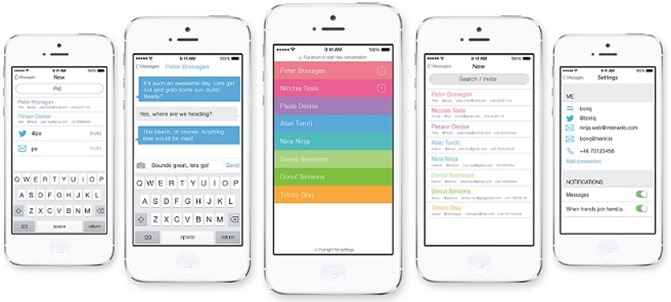
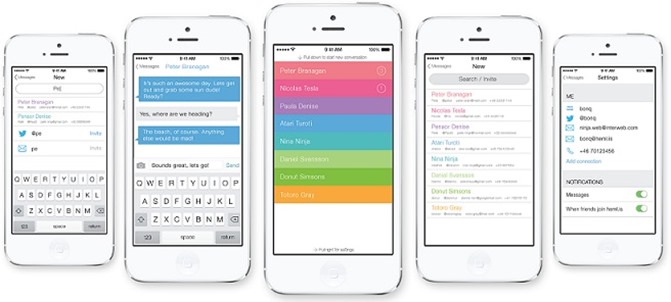
    hemlis_ui_mocksHeml.is (Swedish word for “secret”) is an elegant messaging app for iOS and Android that uses end-to-end encryption to make sure no third party — governments and ISPs included — can intercept the users’ communication.

    Peter Sunde, co-founder of BitTorrent search engine The Pirate Bay, needs your help to create a private messaging app.

    New mobile messaging app that will have superior encryption to prevent pretty much any outside party from listening in on your conversation, he said. 

    Plenty of people are working on making supersecure communication services, but few have the kind of bragging rights that Sunde and Olsson do. Sunde previously attempted to create an ultrasecure cloud storage service, Bay Files, and both he and Olsson also cofounded the ambitious crowdfunded social platform Flattr.

    The app is crowdfunded with a goal of $100,000, with the donation counter currently standing at $27,000. Users who donate $5 or more get unlock codes for the app and other perks, depending on the size of the donation.

    Hemlis will initially be available on iOS and Android The app won’t necessarily be open source because that doesn’t guarantee privacy, but the founders do intend to stay as open as possible with Hemlis’s code. It also said it won’t collect data, sell advertising, or accept funding from investment firms or angel investors. “To guarantee the safety of our users, we can not accept any money ‘with string attached,’” the team wrote in a blog post that was posted recently.

    Why is Heml.is different from WhatsApp, MessageMe, iMessage etc?

    “Our focus is your privacy so we are building everything from software to company structure to protect that. The others are focused on maximising profit.”


    Update (on helm.is blog):

    Funded 100% in 36 hours!
    Wow and incredible thanks to all our backers for funding us in 36 hours! That is one hell of a thing to wake up to. Yeah!
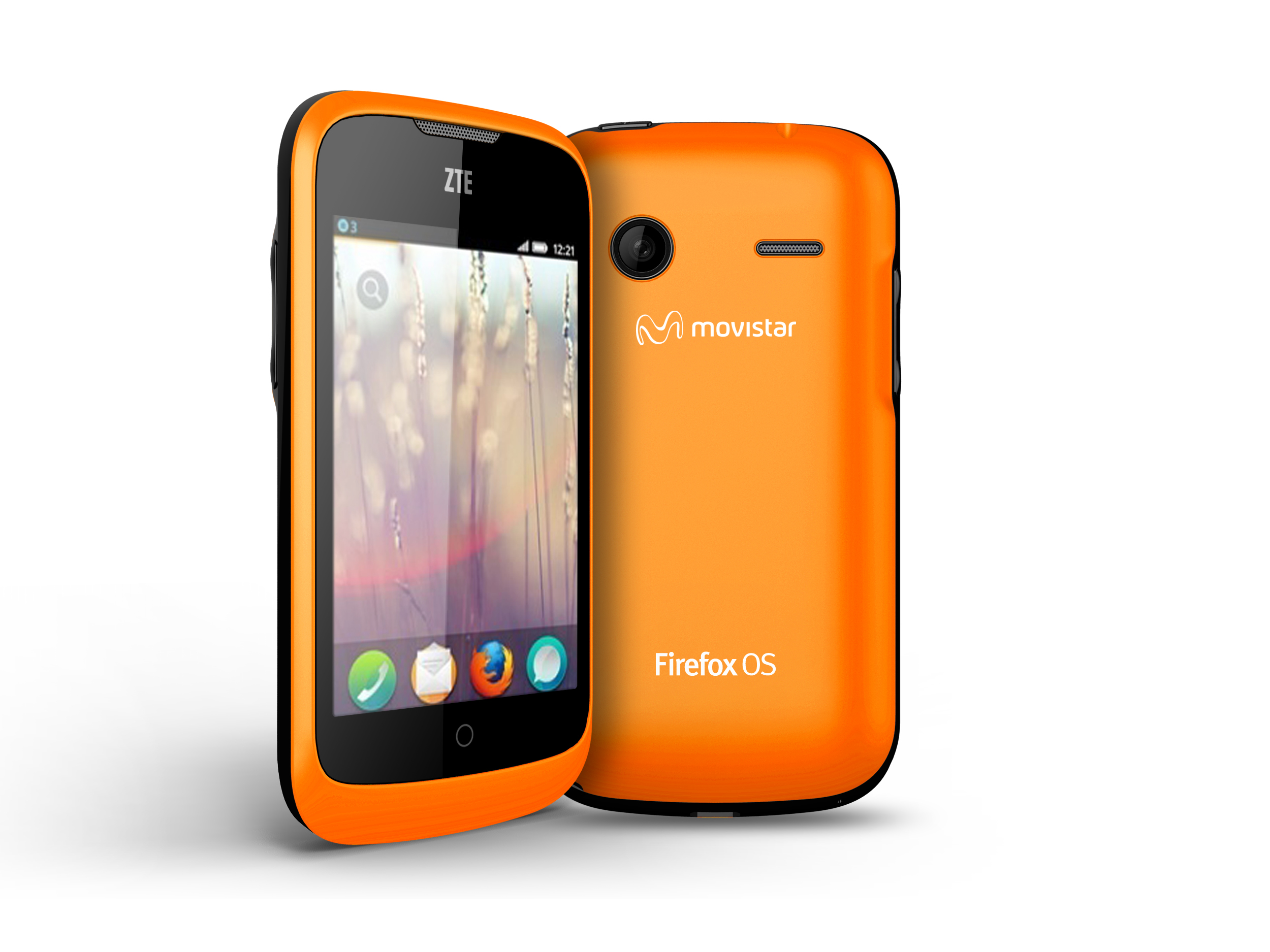
  • First Firefox OS Smartphone ZTE Open on Sale Today in Spain

    First Firefox OS Smartphone ZTE Open on Sale Today in Spain

    Mozilla’s first commercial Firefox OS smartphone, the ZTE Open, released this month, but so far it’s only available in Spain with a few other countries coming soon. The specifications hardly compare to high-end smartphones, but you really can’t beat the price. The ZTE Open retails for €69, or about $88. The company also launched the Firefox OS simulator, in an effort to help developers test out new apps intended for the open-source operating system.

    The ZTE Open comeZTE-Open-Orange-white-20130129s equipped with a 3.5-inch TFT display with a resolution of 320 x 480 pixels, 2GB of memory upgradeable to 32GB via microSD card, 265MB of RAM, a Qualcomm MSM7225A Snapdragon processor, FM radio, GPS, a 1,200 mAh battery and a 3.15-megapixel rear camera. No front-facing camera is included. The handset comes in either blue or orange.

    Only time will tell how this phone fares in a market dominated by Apple and Google whose iOS and Android programs are in 90 percent of smartphones.

  • Nokia Lumia 1020 with 41 MP Camera

    Nokia Lumia 1020 with 41 MP Camera

    nokia-lumia-1020While initially the phone was rumoured to be named Nokia 909, Nokia launched the device as Nokia Lumia 1020. The phone comes with a 41 MP Nokia PureView camera and Xenon flash. While the phone is a successor to Nokia PureView 808 which also features a 41 MP cam and a Xenon flash, Nokia has provided some commendable upgrades to the Lumia device.
    Picture 2900Camera aside, the Lumia 1020 is largely unchanged from the specifications of Nokia’s Lumia 920 and 925. Nokia is adding 2GB of RAM instead of 1GB, and it’s opting for a 4.5-inch AMOLED display like the Lumia 925. There’s some microphone improvements, but the device will run the same 1.5 Ghz dual-core S4 processor as the 920 and 925. One change is the dimensions. The camera is obviously rather large on the rear, but Nokia has managed to keep the device thinner and lighter than the 920. It’s not as slimline as the 925, but it’s 10.4 mm thick and weighs 158g.

    The 41-megapixel Pureview sensor includes optical image stabilization, 6-lens Zeiss optics, and a xenon flash, making it the centerpiece for the rear of the phone. It can shoot still images at 38-megapixel in 4:3 and 16:9 aspect ratios. At the same time as it captures the high-resolution images, it also takes an oversampled 5-megapixel image using the sensor that can then be easily shared thanks to its smaller file size. The Lumia 1020 supports 1080p video capture, complete with 4x zoom and up to 6x at 720p. Nokia is releasing a Pro Camera app with the Picture 2772Lumia 1020 to take advantage of the sensor and manually adjust flash, focus, ISO, white balance, shutter speed, and exposure. It also includes a number of editing functions to crop and alter photos. Nokia is bundling a leather wrist strap with the Lumia 1020, making it even more point-and-shoot-like, but a optional Camera Grip accessory provides a casing for the device with extra battery, a shutter button, and even a tripod mount.
    Whether its outer casing will be metal or polycarbonate remains to be seen, although the Finnish company’s previous high-end device the Lumia 925 sported a metallic chassis and soft-touch rear.

  • Micromax Canvas 4 launched for Rs 17,999

    Micromax Canvas 4 launched for Rs 17,999

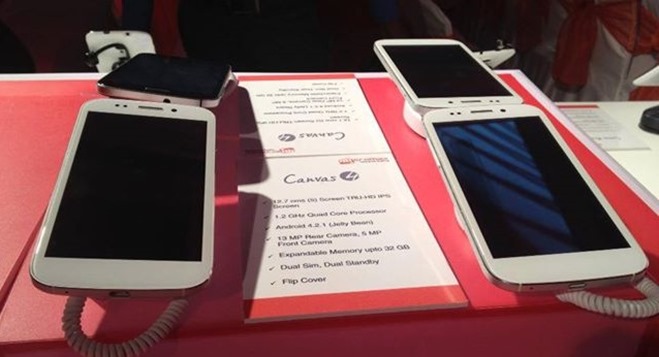
    canvas-4-priceAfter a massive marketing campaign that included televised ads, Micromax has launched the Canvas 4  price for Rs 17,999. Micromax opened pre-orders for the smartphone on June 28 and in the lead up to the launch it has amassed 11,500 pre-bookings.

    The Canvas 4 has a 5-inch HD IPS display and comes in an aluminium casing that also doubles up as an antenna. Micromax says that touchscreen is optimised for use even while wearing gloves.

    The phone is powered by a Cortex A7 1.2 GHz quad-core processor and but doesn’t run on the latest version of Android Jelly Bean, but instead comes with its predecessor Android 4.2.1.

    The phone has 1GB RAM and an internal storage of 16GB.

    Micromax A92 Canvas Lite Now Available For Rs 8,499

    Design wise, it actually seems to be a rebadged version of the BLU Life One and it is actually a step up for Micromax in terms of build quality. It has an aluminium band that wraps around a plastic front and back, and it flaunts iPhone 5 like chamfers.

    It has a microSD card slot and has 16GB of user internal memory, of which about 10GB is available to users. Like most Micromax phones it is a dual-SIM smartphone and has a 2,000 mAh battery.

    One of the unique features of this phone is Blow to Unlock, wherein you essentially blow a kiss to your phone to unlock it (yes, that’s an actual feature). Other, more sensible features include video pinning to pin videos on the homescreen and look away to pause video, stuff that’s straight out of Samsung’s TouchWiz. You can also turn the phone down during a call and it automatically switches to loudspeaker mode It also comes with a special aluminium cover that’s worth Rs 3,000 which is part of the package.

  • Doug Engelbart, inventor of computer mouse, dies

    Doug Engelbart, inventor of computer mouse, dies

    Douglas Engelbart, whose invention of the mouse transformed the way people interact with computers, has died.

    The mild-manengelnered Engelbart had audacious ideas. Long before Apple founder Steve Jobs became famous for his dramatic presentations, Engelbart dazzled the industry at a San Francisco computer conference in 1968.

    Engelbart died Tuesday night at his home in Atherton, California, SRI International — the research institute where he once worked —said in a statement. He was 88.

    A radar technician during World War II, Engelbart worked at the Stanford Research Institute during the 1960s. It was there that a vision of people sitting in front of a video screen, interacting with a computer, came to him.

    Back in the 1950s and ‘60s, when mainframes took up entire rooms and were fed data on punch cards, Engelbart already was envisioning a world in which people used computers to share ideas about solving problems.

    He said his work was all about “augmenting human intellect,” but it boiled down to making computers user-friendly.

    One of the biggest advances was the mouse, which he developed in the 1960s and patented in 1970. At the time, it was a wooden shell covering two metal wheels: An “X-Y position indicator for a display system.”

    The notion of operating the inside of a computer with a tool on the outside was way ahead of its time. The mouse wasn’t commercially available until 1984, with Apple’s new Macintosh.

    In fact, Engelbart’s invention was so early that he and his colleagues didn’t profit much from it. The mouse patent had a 17-year life span, and in 1987 the technology fell into the public domain — meaning Engelbart couldn’t collect royalties on the mouse when it was in its widest use. At least 1 billion have been sold since the mid-1980s.

    Among Engelbart’s other key developments in computing, along with his colleagues at Stanford Research Institute (SRI) and his own lab, the Augmentation Research Centre, was the use of multiple windows. Engelbart’s lab also helped develop ARPANet, the government research network that led to the Internet.